





Marie Curie: science, rigour and universal heritage
Imagine a freezing, poorly insulated shed located on Rue Lhomond in Paris at the dawn of the 20th century. It is in this austere setting that a woman, armed with unwavering determination and an iron rod almost as tall as herself, stirs boiling vats of pitchblende. This woman is Marie Curie. Far from romantic clichés, her true epic is one of a relentless scientific method, a quest for truth, and a total dedication to knowledge. Whilst her name resonates in history books today, her influence extends far beyond fundamental chemistry.
The universal heritage of Marie Curie touches upon unexpected areas of our daily lives, shaping our relationship with energy and medicine, but also with the measurement of time. Her discovery of radioactivity indirectly revolutionised the world of horology, introducing the magic of luminescence to our dials for the very first time.
Dive with us into the fascinating destiny of this pioneer, to understand how her science and rigour continue to illuminate our era even today.

Testimony of an historical collaboration: Marie and Pierre Curie surrounded by their scientific equipment, illustrating the rigour and determination that marked their pioneering work.
A life dedicated to science and method
From Warsaw to Paris: the absolute quest for knowledge
Born Maria Skłodowska in 1867 in Warsaw, the young woman grew up in a Poland under Russian domination, where access to university was strictly forbidden for women. Driven by an unquenchable thirst for learning, she joined a clandestine "Flying University" before saving enough money to exile herself to France. In 1891, she enrolled at the Sorbonne.
Her Parisian student life was marked by extreme precariousness, but also by absolute focus. Studying physics and mathematics, she quickly established herself through her brilliance. It was within this intellectual ferment that she met Pierre Curie, a renowned physicist who would become her research partner and husband. Together, they forged a working method of mathematical rigour, combining Marie's intuition with Pierre's instrumental precision.
To go further: Official page of the Curie Museum
The discoveries that changed the world
History accelerated when she decided to study the mysterious "uranic rays" discovered by Henri Becquerel. Thanks to an electrometer invented by her husband, she measured the activity of various minerals with an obsessive accuracy. In 1898, the couple announced the discovery of two novel elements: polonium (named in tribute to her native country) and radium.
This titanic work required the processing of tonnes of ore to extract minuscule fractions of pure matter. This perseverance was crowned in 1903 with the Nobel Prize in Physics, shared with Pierre Curie and Henri Becquerel. Following the tragic death of Pierre in 1906, Marie continued alone and became the first female professor at the Sorbonne. In 1911, her characterisation of radium earned her a second Nobel Prize, this time in chemistry. To this day, she remains the only person to have been awarded in two distinct scientific disciplines.
Radioactivity and its impact on horology
The fascinating era of radium dials
Radium possessed a fascinating characteristic that captivated the public's imagination: it emitted a spontaneous bluish glow in the dark. Very quickly, industry seized upon this scientific "magic". At the beginning of the 20th century, and particularly during the First World War, watchmakers began to paint the hands and indices of watches with a paint containing radium salts.
For soldiers in the trenches, this innovation was vital. It allowed them to read the time in the dead of night without having to strike a match that could betray their position. Radium became an essential selling point. Luminescent watches thus symbolised absolute modernity, a perfect marriage between mechanical engineering and the latest advancements in quantum physics.

The glow of radium: at the beginning of the 20th century, watchmakers used radioactivity to make dials luminescent, an innovation as fascinating as it was dangerous for the female factory workers of the era.
From danger to luminous innovation
However, this revolution came at a tragic price. The daily handling of radium paint by female watchmaking workers (nicknamed the "Radium Girls") quickly revealed the deadly toxicity of the radiation. Faced with this health tragedy, the use of radium was progressively banned in the watchmaking industry from the mid-20th century onwards, replaced by tritium, and then by completely harmless solutions.
Today, modern horology utilises photoluminescent materials, such as Super-LumiNova. Unlike Marie Curie's radium which produced its own energy, these modern pigments store natural or artificial light to release it in the dark. This process, completely free of radioactivity, guarantees perfect safety whilst offering optimal nocturnal legibility. It is a technological evolution that pays homage to the initial need for light, whilst respecting human health.
The universal heritage of Marie Curie today
A timeless source of inspiration
Marie Curie's heritage cannot be reduced to equations or chemical elements. She embodies the capacity of human willpower to push back the boundaries of ignorance. Her famous maxim, "Nothing in life is to be feared, it is only to be understood", resonates as a mantra for all modern creators, researchers, and artisans.
In a world often guided by immediacy, the figure of Marie Curie serves as a reminder of the value of slow time, patient experimentation, and exacting standards. These are the very same values that drive artisanal creation houses, where every detail, every component, requires meticulous attention before reaching its final form.
A tribute on the wrist: the Marie collection
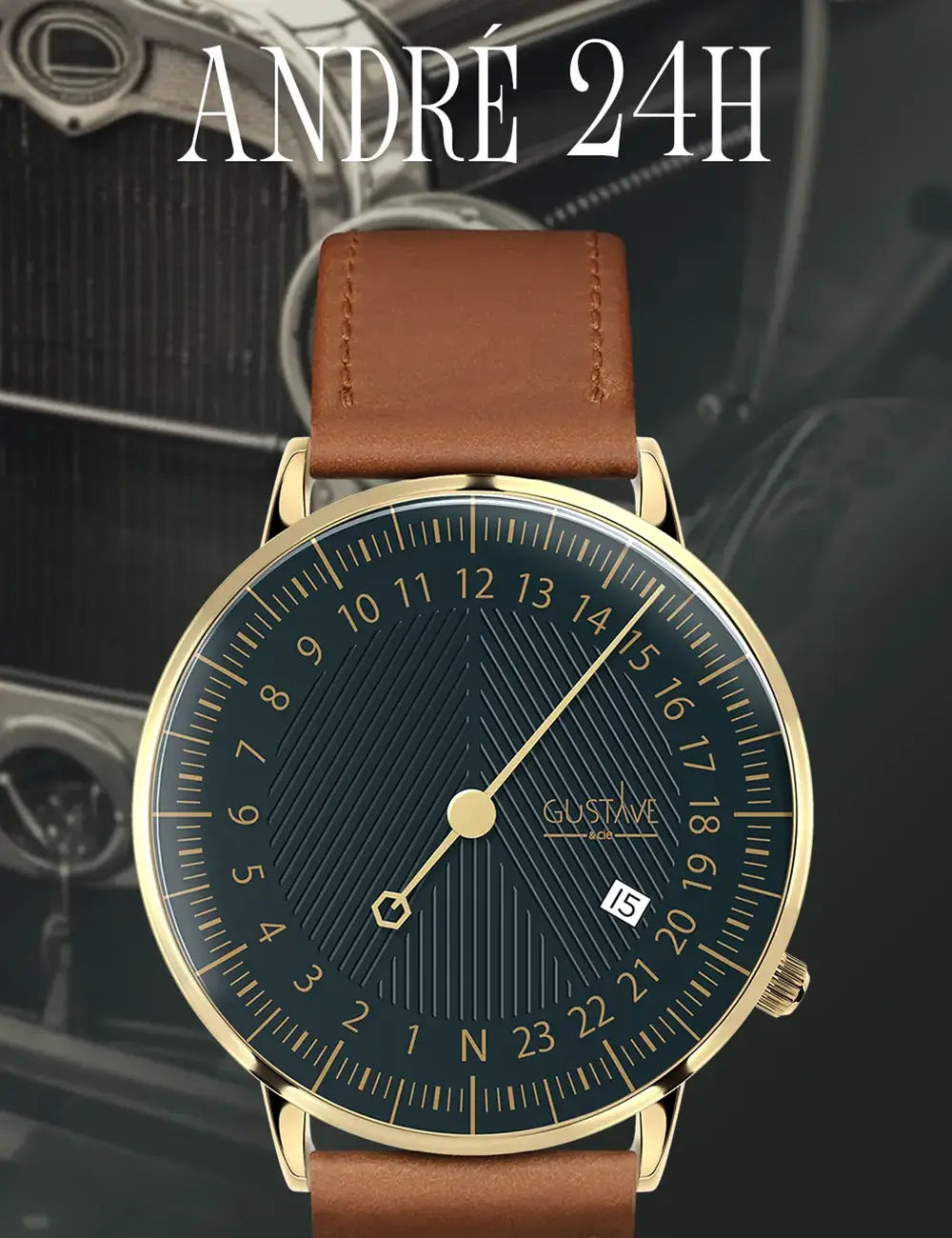
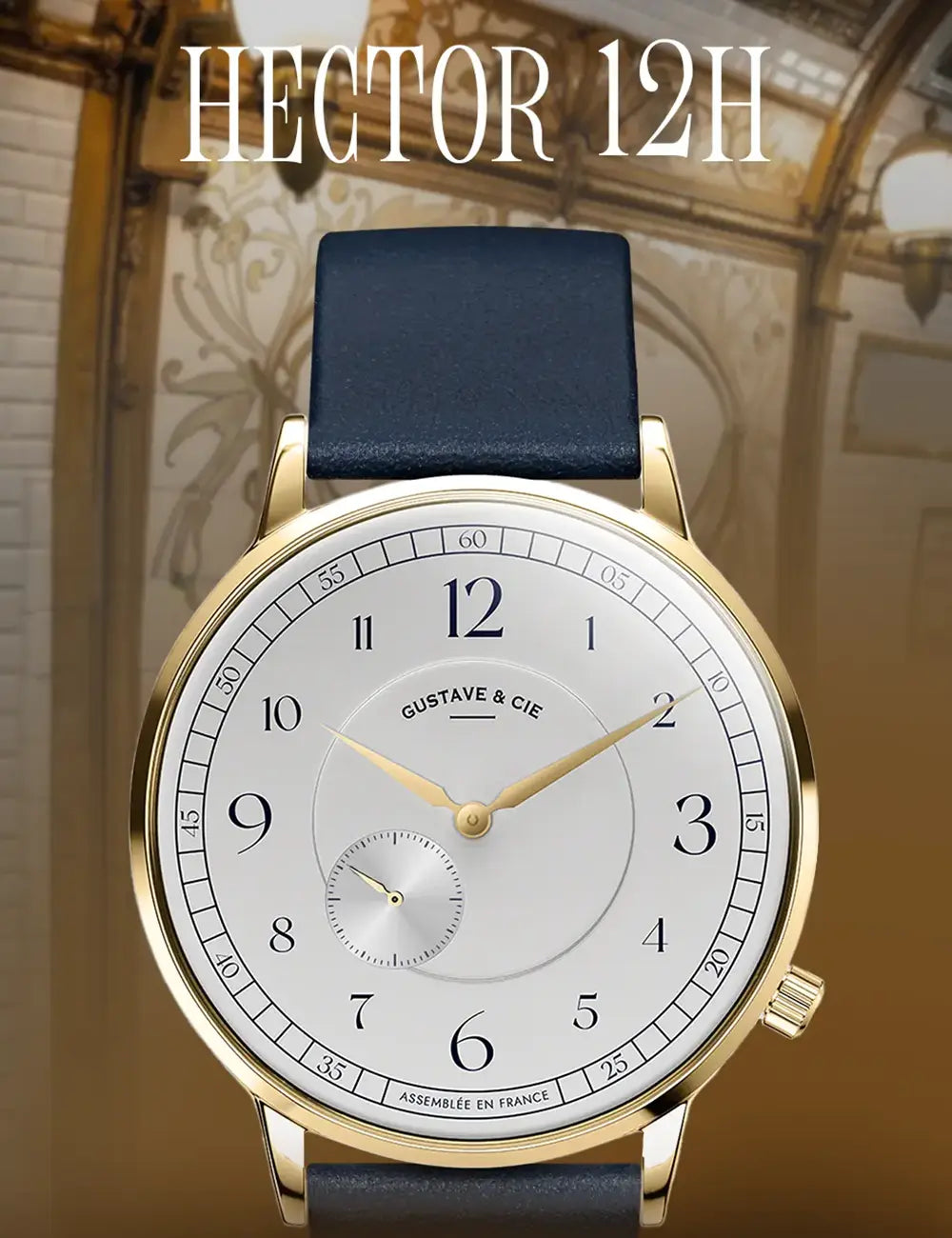
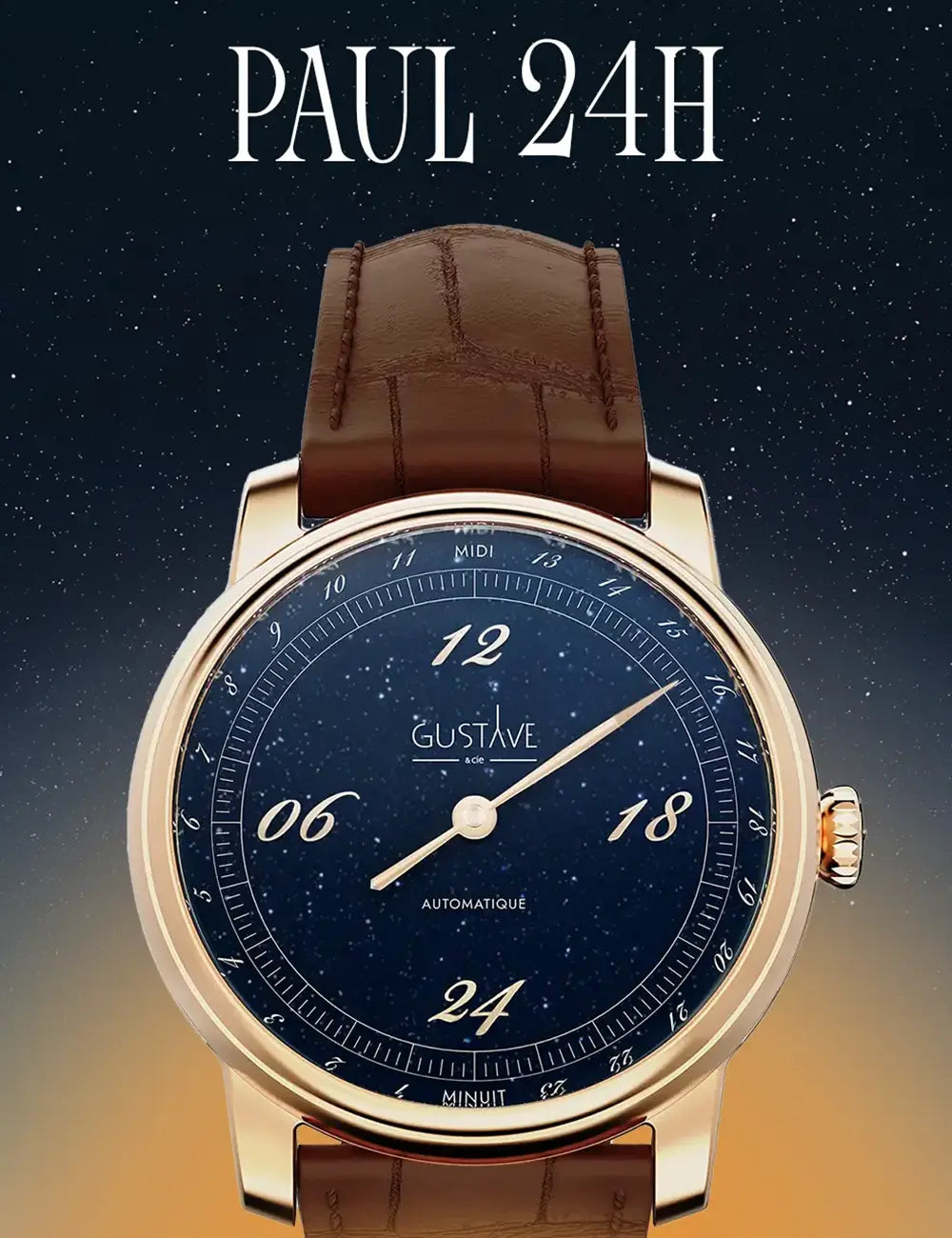
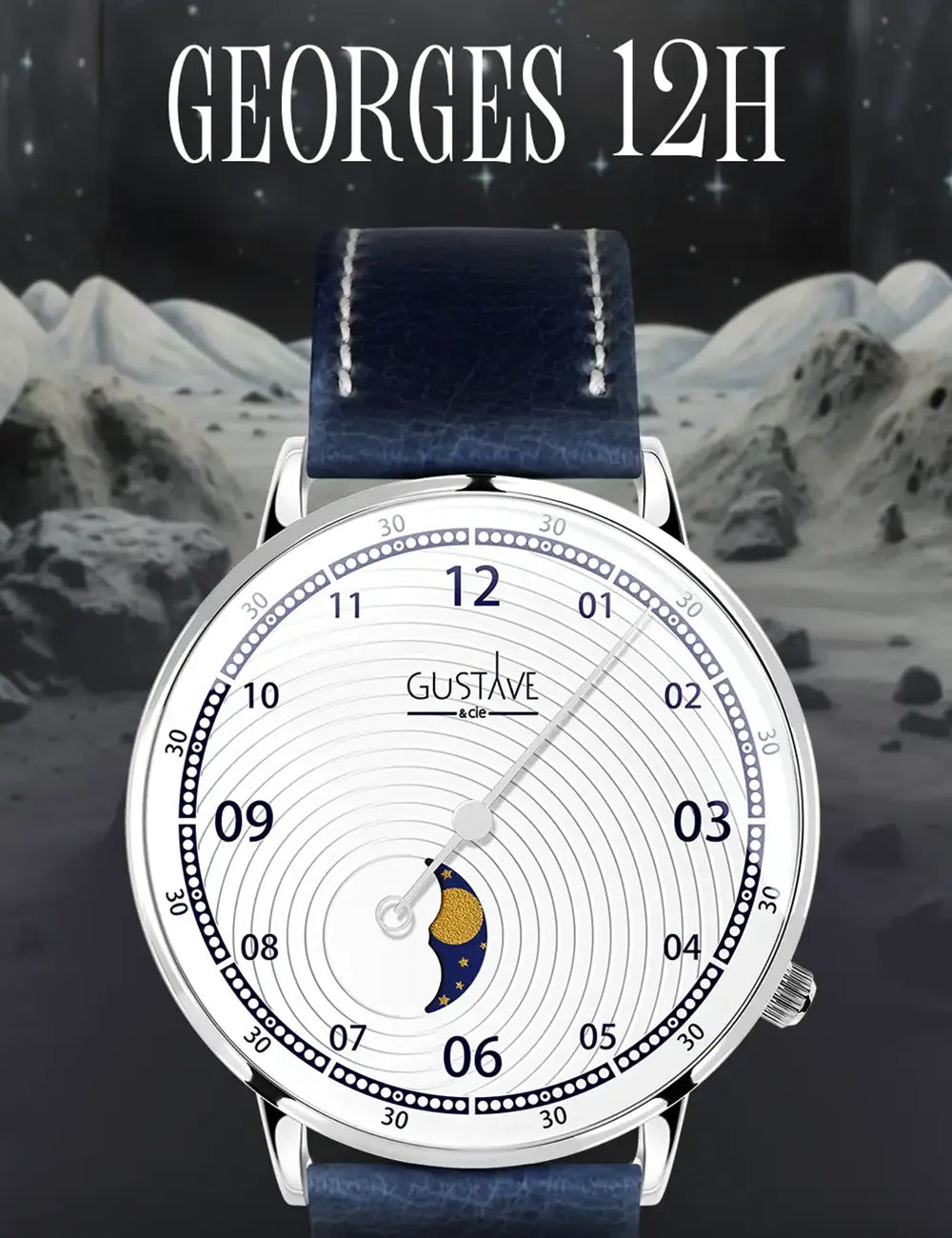
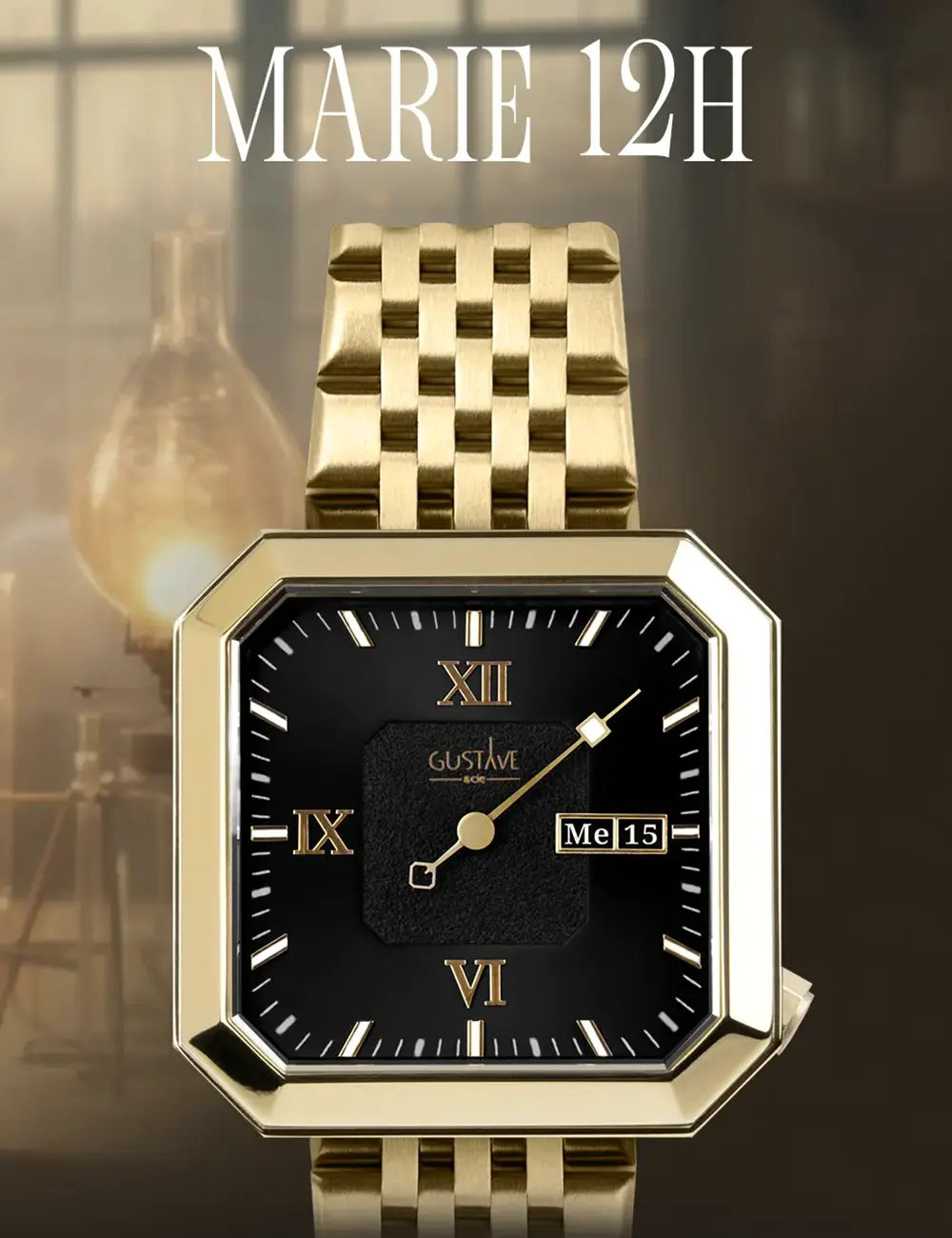
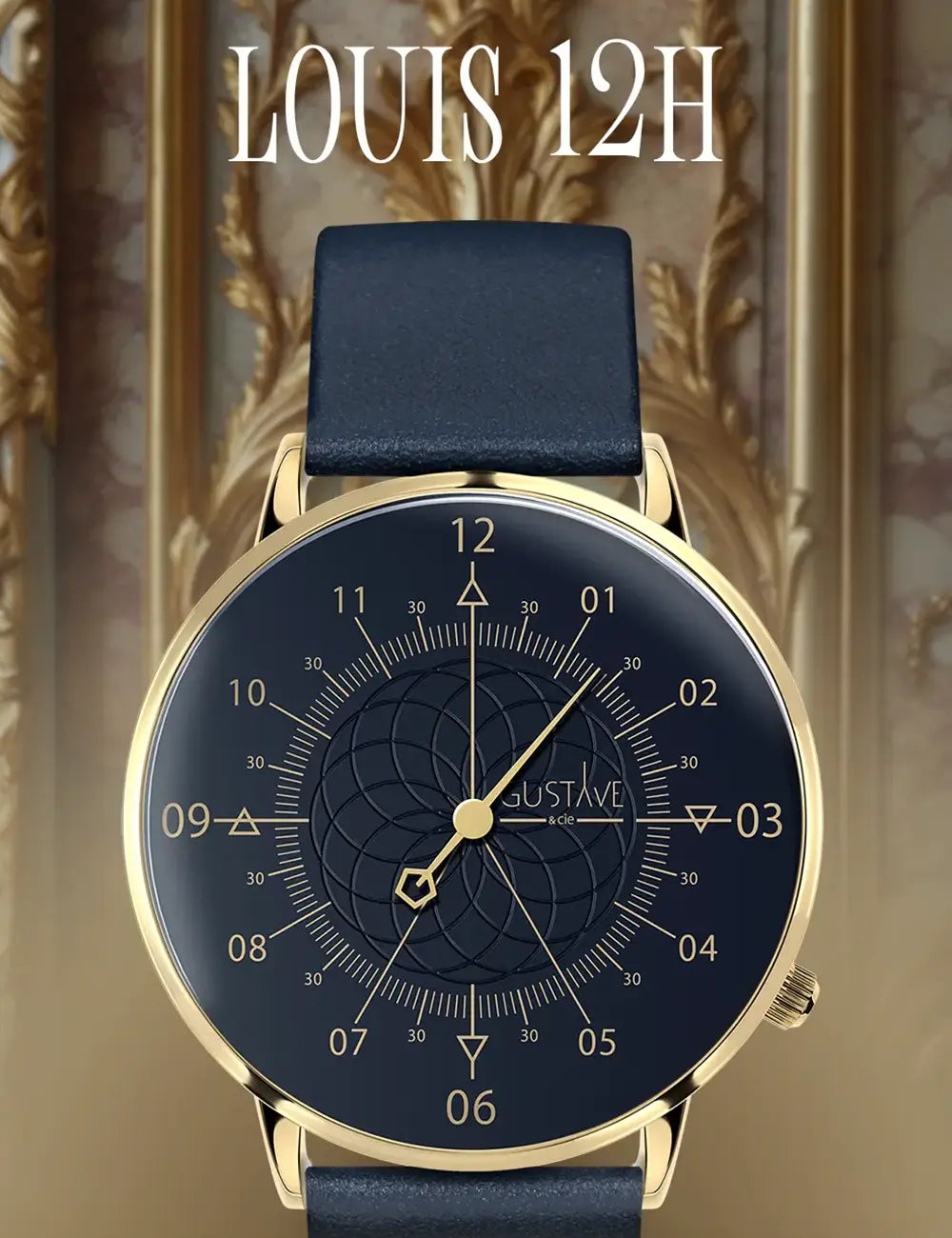
It is precisely this alliance of refinement and scientific rigour that inspired the house of Gustave & Cie. In tribute to this immense scientist, the brand imagined the Marie collection. It blends a minimalist design with formidable functionality, proving that a watch can be useful in all circumstances.

The Marie collection by Gustave & Cie: a subtle alliance between contemporary design and a tribute to the scientific heritage of Marie Curie, enhanced by meticulous nocturnal legibility.
Beneath its discreet elegance lies a technology directly inherited from the quest for light: the Luminova treatment applied to its hands. This technical choice allows the watch to remain subtly legible, even in total darkness, without ever compromising its aesthetics. It is a poetic nod to the history of luminescence, transforming an everyday object into a symbol of knowledge and transmission.
Conclusion
Marie Curie leaves us far more than major scientific advancements; she bequeaths to us a philosophy of perseverance. Her rigour, her independence of mind, and her quest for the invisible continue to fascinate and inspire generations. Whilst methods have evolved and science has managed to secure our practices, the fundamental need to master one's time and see clearly in the night remains intact. To wear a luminescent watch today is to carry with you a tiny fraction of this great human history, a spark of light born from the meeting of scientific genius and craftsmanship.

Leave a comment
This site is protected by hCaptcha and the hCaptcha Privacy Policy and Terms of Service apply.