










Le Marais: Between History and Modernity, the Vibrant Soul of Paris
There are places where time seems to suspend its flight whilst simultaneously accelerating abruptly. In the heart of the French capital, the Right Bank harbours a labyrinth of cobbled streets that fascinates architecture enthusiasts and contemporary art lovers alike. Le Marais is not simply a district of Paris; it is a true open-air history book, whose pages are still being written today to the frenetic rhythm of fashion and design.
When you stroll through it, the magic happens instantly. At every street corner, the contrast catches the eye: behind the wrought-iron gates of a 17th-century aristocratic residence sometimes lies an avant-garde concept store or a minimalist art gallery. It is this fascinating duality, this perfect balance between heritage conservation and creative effervescence, that gives the district its highly distinctive identity.
To understand Le Marais is to agree to travel through time. It means walking in the footsteps of the Kings of France whilst capturing the very essence of contemporary urban culture. Let us discover together how this former marshland has become, over the centuries, the absolute symbol of timeless elegance and Parisian dynamism.

Le Marais, a true temporal link: the majestic facade of a classic private mansion stands alongside the modern, uncluttered shopfront of a conceptual boutique.
A Preserved Royal and Aristocratic Heritage
To grasp the nobility of Le Marais, one must travel back in time to the Middle Ages. As its name suggests with deceptive humility, the district was originally a vast marshy area located on the fringes of the Philippe Auguste wall. It took the colossal work of religious orders to drain these lands and make them cultivable, before they attracted the attention of royalty.
The true historical turning point occurred at the beginning of the 17th century, under the impetus of King Henry IV. By ordering the construction of the Place Royale, now world-famous as the Place des Vosges, the sovereign radically transformed the district's destiny. This masterpiece of symmetry, with its red brick and white stone facades topped with slate roofs, became the epicentre of high society.
To go further : The history of the Marais
The French aristocracy then hastened to build sumptuous residences around this new nerve centre. This was the golden age of the "hôtels particuliers" (private mansions). The Hôtel de Sully, the Hôtel Salé, and the Hôtel Carnavalet were erected, featuring majestic main courtyards and formal French gardens. Today, these architectural jewels with their sculpted facades still testify to the grandeur of an era when Le Marais was the beating heart of power and elegance.
The Renaissance: Saving a District in Peril
Yet, the destiny of Le Marais almost slipped into oblivion. At the end of the 17th century, the court left Paris for Versailles, taking the nobility in its wake. The district gradually emptied of its aristocrats and, over the decades, new working-class and artisan populations moved in. The sumptuous private mansions were divided up, built upon, and often transformed into unsanitary workshops.
In the aftermath of the Second World War, the situation was alarming. Le Marais had become an island of dilapidation in the heart of Paris, threatened with destruction by modern urban planning projects that aimed to raze these old stones to build towers and expressways. This was without counting on the providential intervention of André Malraux, then Minister of Cultural Affairs under Charles de Gaulle.
In 1962, the promulgation of the "Malraux Law" marked the resurrection of the district. Le Marais became the first "safeguarded sector" in France. The State launched a vast restoration plan, cleaning the blackened facades, expelling polluting industries, and rehabilitating the inner courtyards. This unprecedented architectural rescue made it possible to preserve this unique atmosphere, offering Paris one of its most precious heritage sites.

The Hôtel de Sens through the ages: a plunge into time, illustrating the remarkable metamorphosis of this medieval jewel in the heart of the Marais district.
An Inimitable Cultural Mosaic
Le Marais is not only an open-air architectural museum; it is a profoundly vibrant district, shaped by the communities that have succeeded one another and coexist there. This human richness is the true engine of its modernity. In the heart of the district, the Rue des Rosiers has embodied the soul of the Ashkenazi Jewish community of Paris since the end of the 19th century. The scent of falafels and traditional pastries mingles with lively discussions, perpetuating a vibrant culture.
In the 1980s, Le Marais underwent a new mutation, becoming the focal point of the French LGBTQ+ community. The Rue Sainte-Croix-de-la-Bretonnerie and Rue des Archives filled with bars, bookshops, and social venues that breathed a wind of freedom, tolerance, and celebration. This cultural diversity has allowed the district never to freeze in its past, but on the contrary, to remain a laboratory of social evolution.
|
Period |
Evolution of the district |
Population and society |
Culture and heritage |
|
17th century |
Le Marais becomes one of the most prestigious districts in Paris. |
Aristocracy, nobility, and high officials settle here. |
Construction of numerous private mansions, including the Hôtel de Sully and the Hôtel de Carnavalet. |
|
18th century |
The district retains its prestige but progressively begins to lose its aristocratic character. |
A more bourgeois and merchant population settles in the district. |
Private mansions are gradually transformed or divided. |
|
French Revolution |
Disappearance of numerous privileges and upheaval of land ownership. |
Departure of a portion of the aristocracy; new owners and residents. |
Several aristocratic residences are seized or change function. |
|
19th century |
Le Marais becomes a working-class and artisanal district. |
Strong presence of artisans, merchants, and workers, particularly around the textile industry. |
Older heritage is sometimes neglected or altered to meet economic needs. |
|
Late 19th – early 20th |
The district experiences high density and relative economic decline. |
Working-class populations, artisans, and immigrant communities, notably Jewish, settle permanently. |
Historic buildings suffer from a lack of maintenance; some private mansions become highly degraded. |
|
1940s–1960s |
Gradual awareness of the district's heritage value. |
Slow transformation of the population and progressive decline of certain artisanal activities. |
Creation of the safeguarded sector of Le Marais in 1964, marking a major turning point in heritage conservation. |
|
1970s–1980s |
Le Marais begins to emerge as a cultural and tourist district. |
Arrival of more affluent populations and the development of a particularly visible LGBT+ community. |
Opening of galleries, cultural venues, and new businesses; restoration of many historic buildings. |
|
1990s–2000s |
Strong acceleration of gentrification. |
More affluent social categories progressively replace part of the traditional population. |
Development of art galleries, designer boutiques, restaurants, and concept stores. |
|
Since the 2010s |
Le Marais becomes one of the most iconic and touristic districts in Paris. |
A highly mixed district where residents, tourists, merchants, and historical communities coexist. |
Historical heritage cohabits with a highly dynamic art, fashion, design, and lifestyle scene. |
|
Today |
Le Marais combines historical heritage, commerce, culture, and international tourism. |
Strong appeal to Parisians, international visitors, and new residents. |
Private mansions, museums, galleries, independent boutiques, and contemporary brands sit side by side in the same urban space. |
Today, this mosaic creates a perfect alchemy. Contemporary art galleries have flourished in former artisan workshops, attracting collectors from all over the world. Le Marais has thus become a crossroads where artists, intellectuals, fashion designers, and history enthusiasts meet, proving that the memory of a place is enriched by the voices of those who inhabit it.
The Epicentre of Avant-Garde and Design
If there is one domain where Le Marais excels in linking past and present, it is indeed that of aesthetics. Take a stroll down the Rue des Francs-Bourgeois or the Rue Vieille-du-Temple, and you will notice that the district has established itself as the showcase of the French art of living and international design. The most cutting-edge brands and independent designers vie to set up their boutiques here.
What is most striking is the deliberate architectural contrast. Garments with futuristic cuts are displayed beneath exposed beamed ceilings dating back several centuries. High-tech objects sit alongside ashlar masonry. This demanding urban scenography makes the district an inexhaustible source of inspiration for designers worldwide, who find proof here that innovation expresses itself best when it rests upon solid historical foundations.
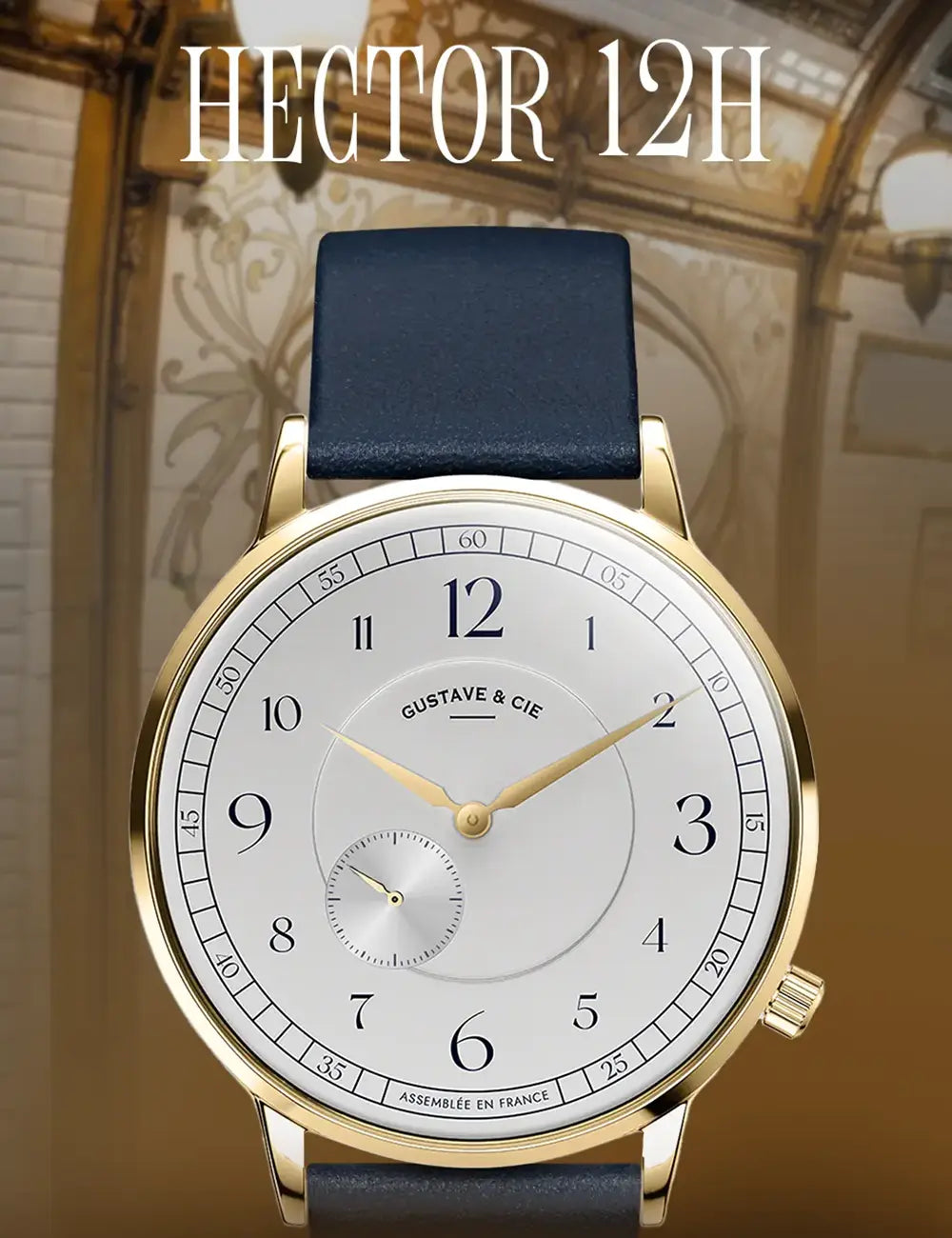
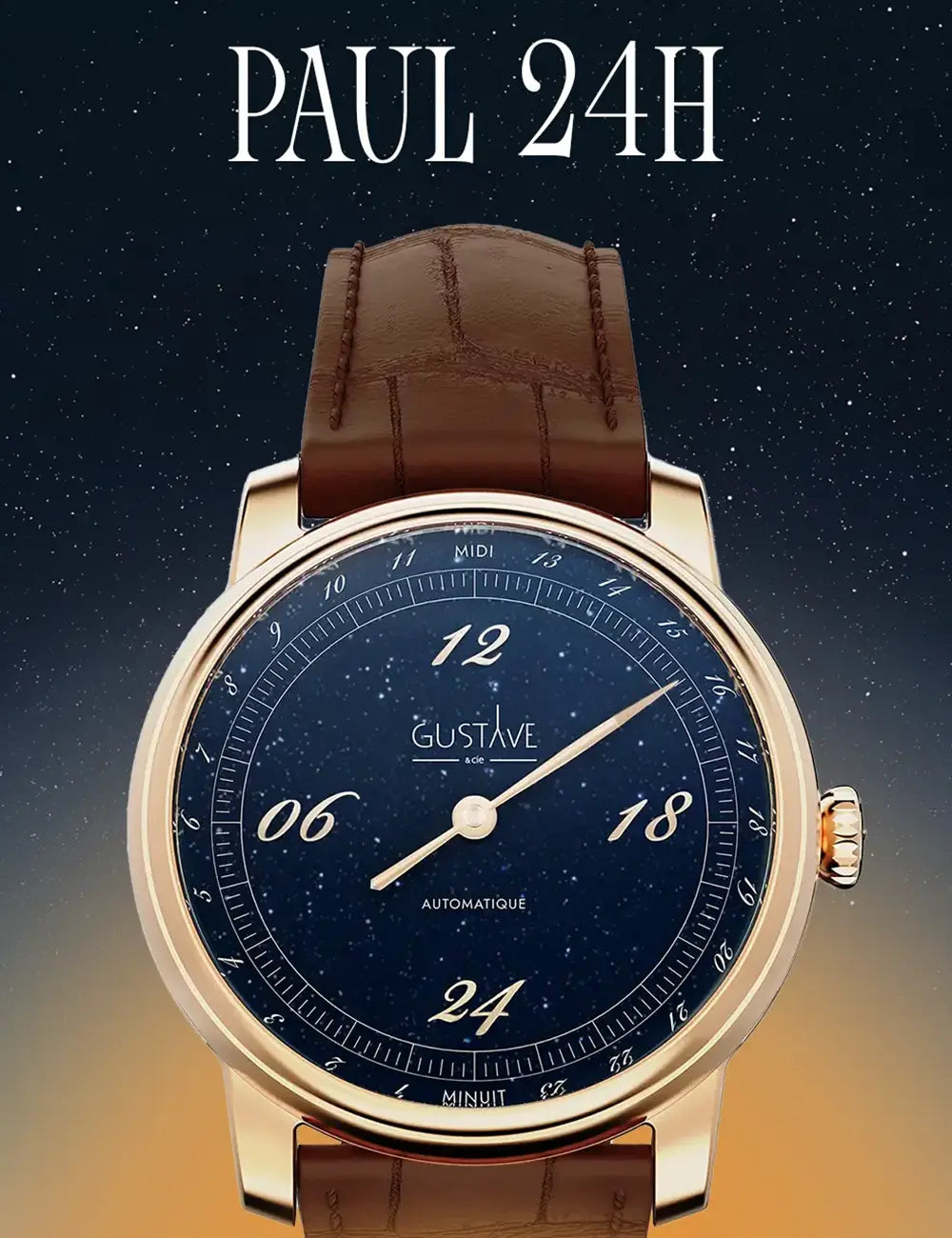
This is, moreover, the very same philosophy that drives French creators today, whether they are designing fashion, furniture, or horology. The idea that an object, whilst being resolutely modern in its lines, can pay homage to a strong historical legacy is an approach deeply anchored in the spirit of Le Marais.

Le Marais day-to-day: between historical cobblestones and modern boutiques, the district bears witness to its dynamism and its unique Parisian lifestyle.
Hidden Courtyards and Secret Gardens: The Luxury of Reclaimed Time
Despite its effervescence, Le Marais offers a rare luxury in a metropolis like Paris: that of silence and intimacy. Push open the heavy carriage doors at random (when they are unlocked) and you will discover an unsuspected universe. The cobbled inner courtyards, once designed to accommodate carriages, are today veritable havens of peace where wisteria and climbing roses flourish.
The gardens of Le Marais, often concealed behind high walls, invite contemplation. The Square Georges-Cain, adorned with archaeological remains, or the Jardin des Rosiers–Joseph-Migneret, are among those secret places where one comes to read a book, far from the tumult of the boulevards. In these leafy interludes, the very notion of time seems to alter.
It is here that one grasps all the poetry of the district. Flâner (strolling) through Le Marais means agreeing to lose track of time, to forget urgency, and to let oneself be guided by the beauty of an architectural detail, the curve of a sculpture, or the calm of a hidden garden. It is an invitation to experience time differently, with elegance and serenity.
Conclusion
Le Marais is far more than a simple juxtaposition of eras; it is a continuous and harmonious dialogue between the history of France and the most absolute modernity. It proves to us that preserving one's heritage does not mean confining oneself to it, but rather using it as a jewel box to sublimate contemporary creation. From the majesty of the Place des Vosges to the audacity of the concept stores on the Rue des Archives, every step in this district is a celebration of the Parisian art of living. It is this highly singular spirit—this respect for roots coupled with a love of innovation—that continues to inspire French creators and enchant wanderers from across the globe.

Leave a comment
This site is protected by hCaptcha and the hCaptcha Privacy Policy and Terms of Service apply.