


What is a GMT watch and what is it used for?
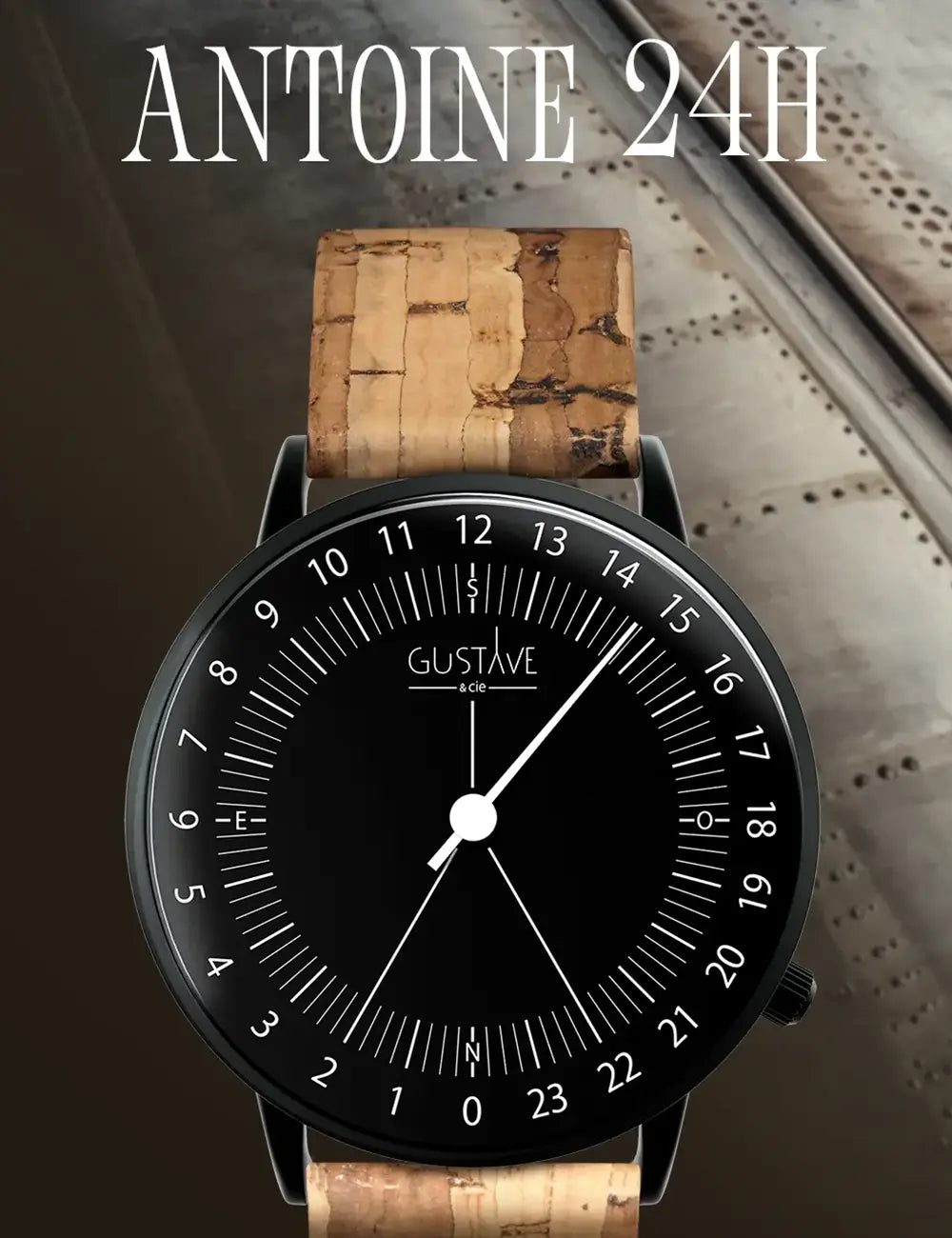
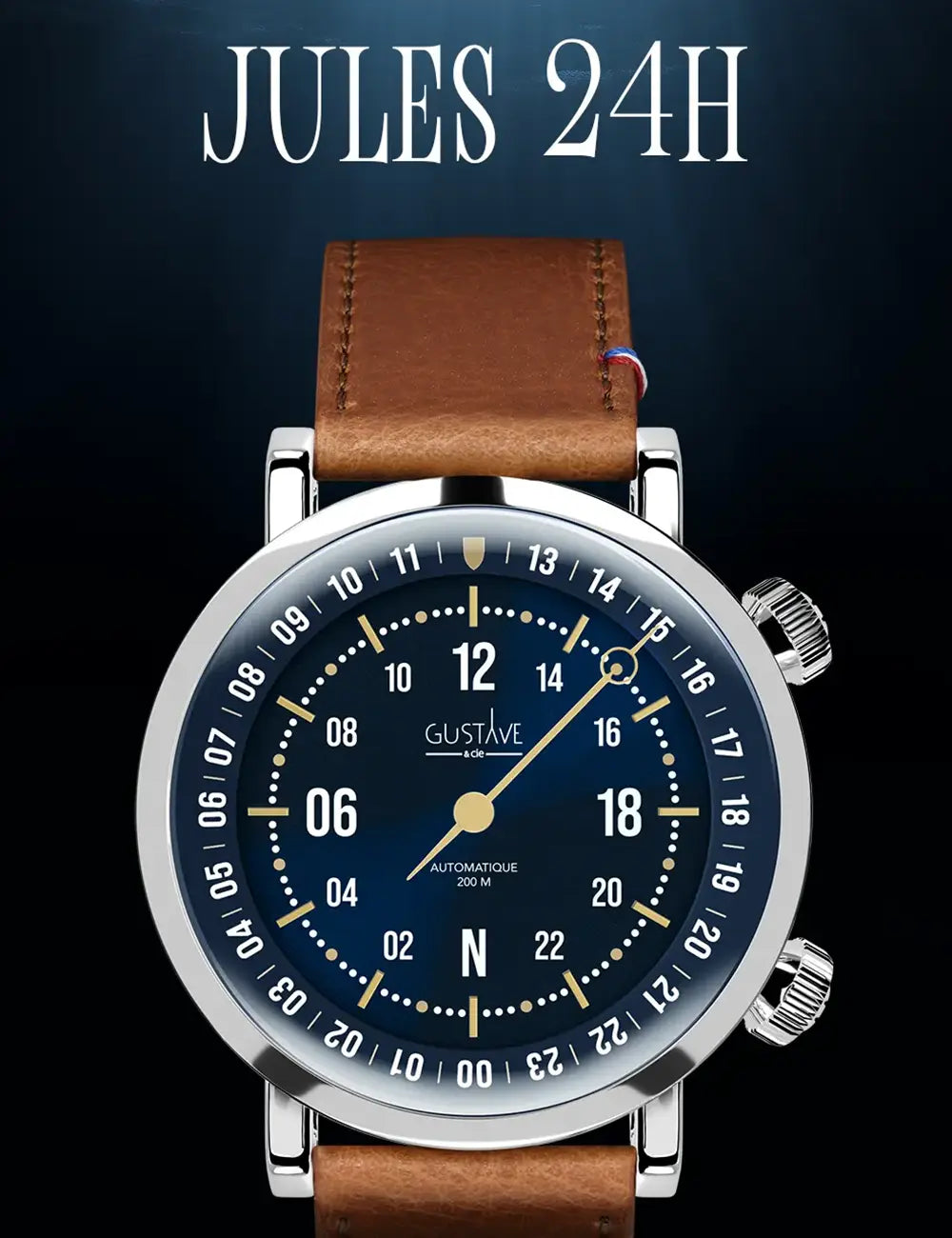
The GMT complication (for Greenwich Mean Time) was originally invented for airline pilots and frequent travelers. It allows at least two time zones to be displayed simultaneously, thanks to an additional hand and a 24-hour graduated bezel.

Unlike traditional watches, whose hour hand makes two rotations per day (12 hours), the GMT hand completes a single rotation every 24 hours. It therefore points to a different time scale, which may be engraved or printed on a rotating bezel.
What’s the benefit? You keep local time using the traditional hands while reading the time in another country or city thanks to the GMT hand. Ideal for those who travel frequently or work with international partners.
How does reading a GMT time on a 24-hour bezel work?
To correctly read a GMT bezel, you need to understand the role of each element:
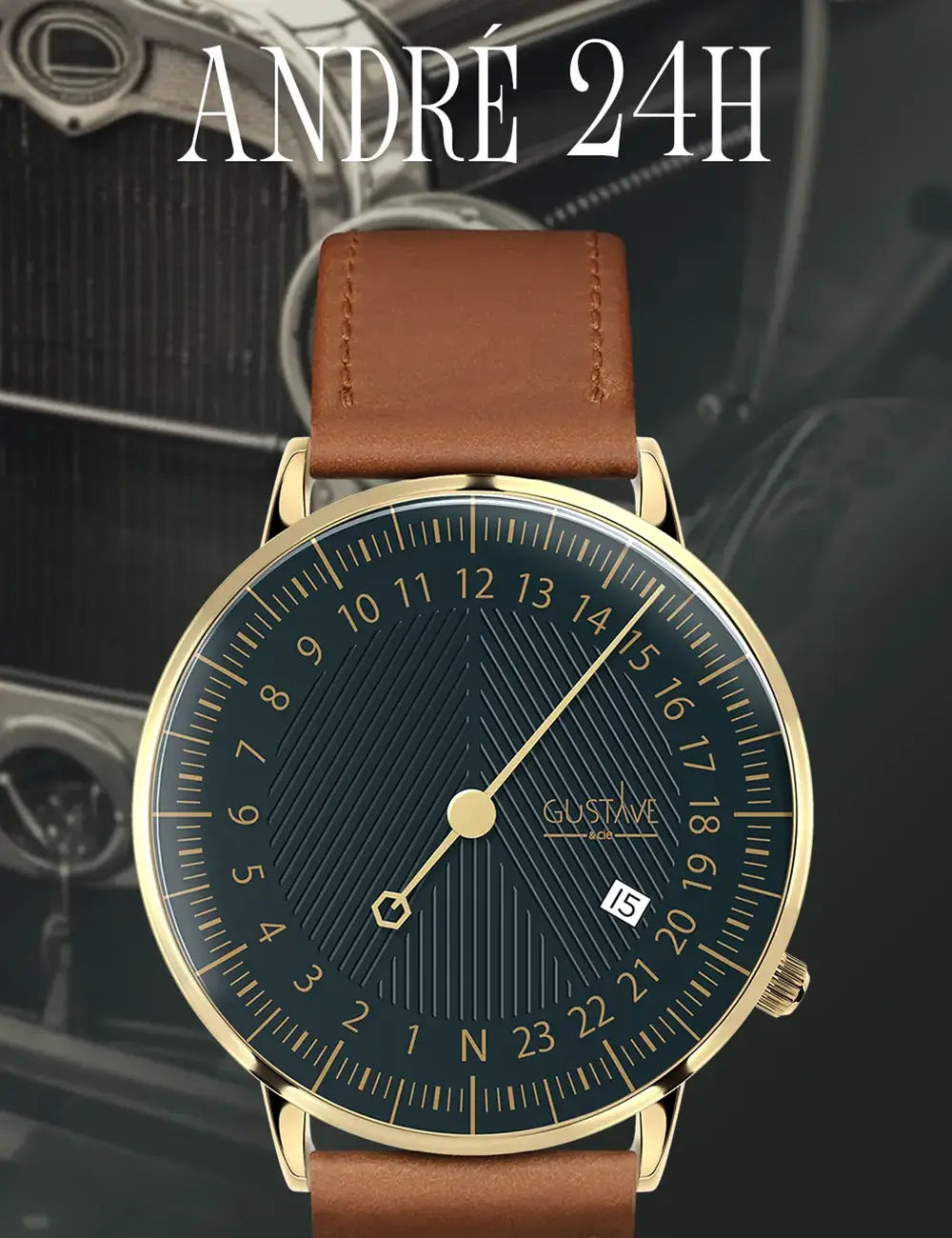
The GMT hand: it indicates time on a 24-hour scale (for example, 18 = 6 p.m., 6 = 6 a.m.).
The 24-hour bezel: it features 24 markings corresponding to each hour of the day. It can be fixed or rotating (in which case it allows you to display a third time zone).
Here’s how to read the time in a second time zone:
Set the local time using the standard hands (hours and minutes).
Set the GMT hand to the time of your second time zone, using the 24-hour scale as a reference.
Read the GMT time on the bezel where the GMT hand is pointing.
Example:
You are in Paris (local time) and want to know the time in Tokyo. The hour hand shows 2 p.m., and you set the GMT hand to 22 (10 p.m.). On the 24-hour bezel, you can then directly read the time in Tokyo without having to mentally calculate the time difference (+7 hours).
What is the rotating bezel on a GMT watch used for?
Some GMT watches feature an internal or external bidirectional rotating bezel, allowing you to temporarily track a third time zone.
How does it work?
You already know the local time (main hands) and a second time zone (GMT hand).
If you want to check a third time zone (for example, your client’s time in Dubai), simply rotate the bezel to adjust the time difference between this new zone and the one currently indicated by the GMT hand.
The GMT hand will then point to the newly adjusted time on the bezel, without changing the internal settings of the watch.
This system is extremely practical for frequent travelers, international professionals, or aviation enthusiasts.
Why choose a GMT watch instead of a digital display?
Unlike digital solutions, a GMT watch offers an intuitive way to read multiple time zones at a glance, without navigating menus or using an app.
It is also:
More elegant: GMT watch designs, often inspired by aviation or exploration, make them true style pieces.
More reliable: no risk of software bugs or a drained battery.
More traditional: for watchmaking enthusiasts, the GMT function represents a complication that is both practical and refined.
Some watch brands also offer automatic models whose crown allows the hour hand to be adjusted independently from the GMT hand, making time changes smoother while traveling.
Conclusion: Travel through time with elegance thanks to the Jules GMT by Gustave & Cie
The GMT bezel is not just a technical tool; it is a travel companion, a constant link to distant places, and an invitation to think beyond your own time zone. It allows you to live between here and elsewhere while staying in control of your time.
At Gustave & Cie, we share this vision of watchmaking as useful, poetic, and precise. That is why we created the Jules collection — our range of GMT watches designed for today’s explorers. Each model features a reliable automatic movement, an internal bezel, and a GMT display that combines clarity with understated design.
With the Jules collection, you can track a second time zone at a glance while expressing a distinctive, minimalist watchmaking style true to our brand’s DNA.
Leave a comment
This site is protected by hCaptcha and the hCaptcha Privacy Policy and Terms of Service apply.