











The great return of artisanal objects: a tribute to authenticity in everyday life
We are living in a paradoxical era. While digital technology has never been so omnipresent and mass production dictates consumption standards, a profound and silent trend is redesigning our interiors and habits: the return to grace of artisanal objects. Far from being a mere passing nostalgia, this movement reflects a visceral need to reconnect with the real, the tangible, and the human. In a world where everything is accelerating, surrounding oneself with hand-crafted creations offers a breath of fresh air.
Craftsmanship is no longer perceived as a relic of the past, but as the ultimate luxury of our modernity. Opting for artisanal objects means making a deliberate choice for singularity over uniformity, and for durability over the ephemeral. Understanding this enthusiasm means analysing the evolution of our contemporary art of living, which is increasingly focused on the search for meaning.
Why this enthusiasm for handmade goods and craftsmanship?
The contemporary fascination with artisanal objects is primarily explained by the search for a story. When a piece leaves a factory, it is anonymous, reproduced in thousands of copies according to a standardised set of specifications. Conversely, the artisanal object bears the imprint of its creator. Every irregularity, every nuance of colour or texture tells the story of the gesture, the tool, and the time devoted to its creation. It is this "perfect imperfection" that gives the object its added soul.
Furthermore, our relationship with consumption has fundamentally evolved. Today's consumers demand total transparency. Knowing where a product comes from, who made it, and under what conditions has become a prerequisite. Artisanal objects naturally meet this requirement for ethics and traceability. They embody a reasoned production, often local, which values short supply chains.

Leather craftsmanship: a precise manual skill that restores meaning to slow time and sustainable creation.
Credit: Pexels - official image, editorial use.
By acquiring the fruit of manual craftsmanship, you are not simply buying a function or an aesthetic; you are supporting a tradition, a transmission, and a human-scale economy. It is a committed act that restores value to slow time. In our lives dictated by immediacy, the contemplation of a hand-thrown ceramic or meticulously top-stitched leather reminds us that the most beautiful things require patience.
Noble materials at the heart of this aesthetic renaissance
The return of artisanal objects is inseparable from a rediscovered love for raw and noble materials. Ceramics, solid wood, genuine leather, hand-blown glass, or even forged steel are the preferred mediums of this trend. Unlike plastics and synthetic materials that degrade and lose their splendour over time, natural materials live, breathe, and evolve with you.
Take the example of leather, the king material of fine craftsmanship. Whether used for leather goods, furniture, or subtle accessory details, full-grain leather acquires a unique patina over the years. It softens and darkens slightly in areas of friction, thus telling the story of its use. Similarly, solid wood will reveal the depth of its grain under the effect of natural light, whilst a brass object will oxidise subtly to offer an inimitable vintage charm.
To go further: Article on natural materials in interior design
These materials demand absolute mastery. Working with the nobility of a material means accepting its constraints, and engaging in a dialogue with it rather than forcing it. This is where the artisan's expertise takes on its full meaning. The visual and tactile result is undeniable: the weight of a well-made object, the warmth of its texture, and its perfect balance are sensations that industrial production struggles to reproduce. Surrounding oneself with such materials means inviting nature and truth into one's living space.
French craftsmanship: a cultural heritage serving the everyday
It is impossible to discuss the return of artisanal objects without highlighting the excellence of French craftsmanship. Recognised worldwide, France possesses an exceptional network of manufactures, workshops, and independent creators who perpetuate secular techniques whilst reinventing them to suit today's uses. From silk working in Lyon to precision watchmaking in Besançon, via Limoges porcelain or Thiers cutlery, each region carries a precious heritage.
This territorial richness guarantees an incredible diversity of creations, combining tradition with contemporary design. Today, French artisans are increasingly collaborating with designers to offer everyday objects that dust off the classic image of handmade goods. Craftsmanship is no longer limited to pure ornamentation; it has become functional.

Diving into the workshop: the crucial design stage, where sketches and tools draw the beginnings of a unique piece.
Credit: Pexels - official image, editorial use.
Favouring "Made in France" when choosing your artisanal objects is also a guarantee of unparalleled technical quality. The rigour applied to the finishes, the drastic selection of local materials, and the compliance with strict environmental standards make these creations sustainable investments. These pieces are not designed to be replaced at the next trend, but to be passed down. They become true elements of personal heritage.
How to integrate artisanal objects into your lifestyle?
Integrating craftsmanship into your daily life does not require transforming your interior into a traditional museum. On the contrary, the secret lies in sparsity and contrast. The fundamental principle is to adopt a minimalist approach: own less, but better.
Start with everyday items that you handle often. A ceramic mug with irregular contours will make your morning coffee ritual far more flavourful. A beautifully hand-bound notebook, a finely turned pen, or a handsome functional object placed on a desk instantly transforms an impersonal workspace into a warm and inspiring environment.
Blending styles is also a highly elegant approach. A very contemporary interior, with clean and minimalist lines, will be enhanced by the presence of one or two strong artisanal pieces: a large sculptural vase fired in a wood oven, or a hand-woven luminaire. These objects act as visual anchor points, bringing texture and warmth to the space. Finally, pay attention to sartorial details and accessories: choosing carefully assembled pieces asserts a discreet elegance, one that is not noticed through ostentatious logos, but through the perfection of a seam or the precision of a finish.
Conclusion
The great return of artisanal objects is much more than a mere stylistic interlude; it is a true philosophy of life. It testifies to our collective desire to slow down, re-evaluate what truly matters, and celebrate human ingenuity. By choosing to surround ourselves with handmade creations, we reintroduce poetry and authenticity into our intimate spaces. Each object becomes a silent companion, a witness to our daily lives, which will grow more beautiful with the years whilst honouring the craftsmanship of the one who shaped it. The elegance of tomorrow will undoubtedly lie in this ability to favour the unique and the durable.
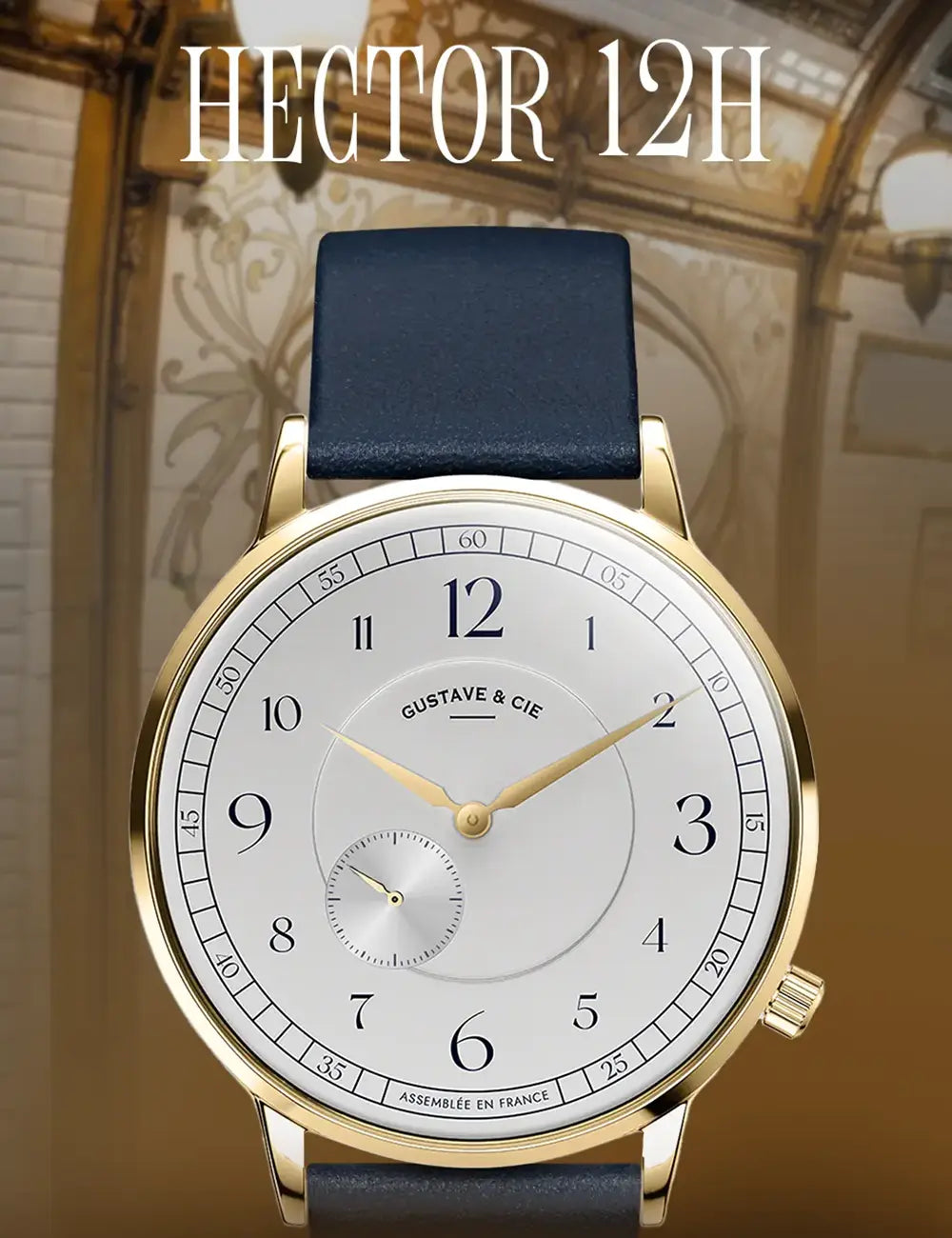
Discover our collection of watches assembled in France


Leave a comment
This site is protected by hCaptcha and the hCaptcha Privacy Policy and Terms of Service apply.