

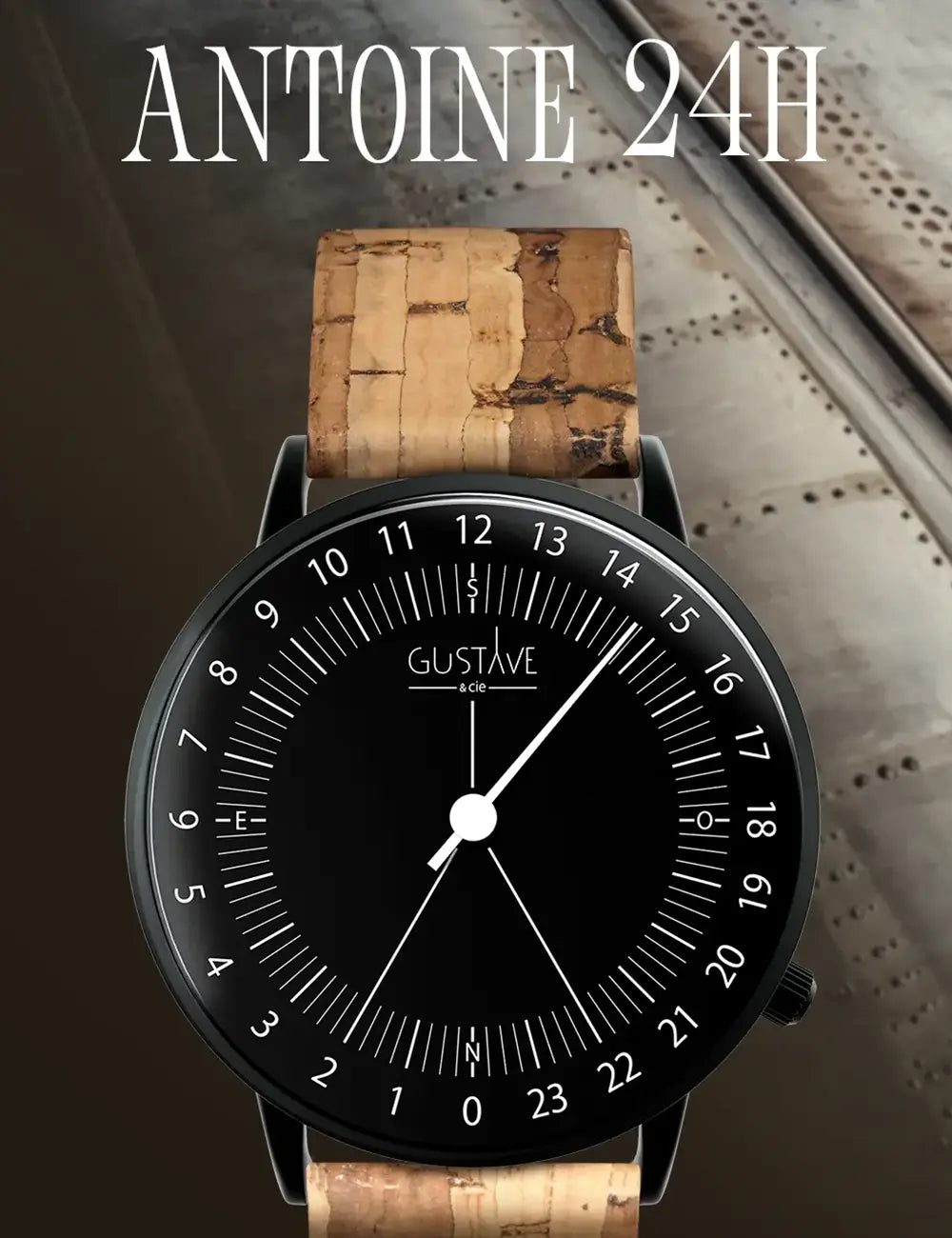

The Watch Crown: Function, Importance, and Maintenance
Often eclipsed by the beauty of a dial or the complexity of a movement visible through a sapphire case back, the watch crown is nevertheless the component most frequently handled by the wearer. This small fluted button, delicately positioned on the flank of the case, constitutes the sole physical interface between you and the mechanical heart of your timepiece. Without it, the watch would be an impenetrable fortress, impossible to set or wind.
Far more than a mere aesthetic detail, the crown is a marvel of micro-mechanics that fulfils vital functions for the precision, longevity, and protection of the watch. Let us delve into the inner workings of this indispensable horological element, to understand its precise function, structural importance, and the best practices for everyday use.

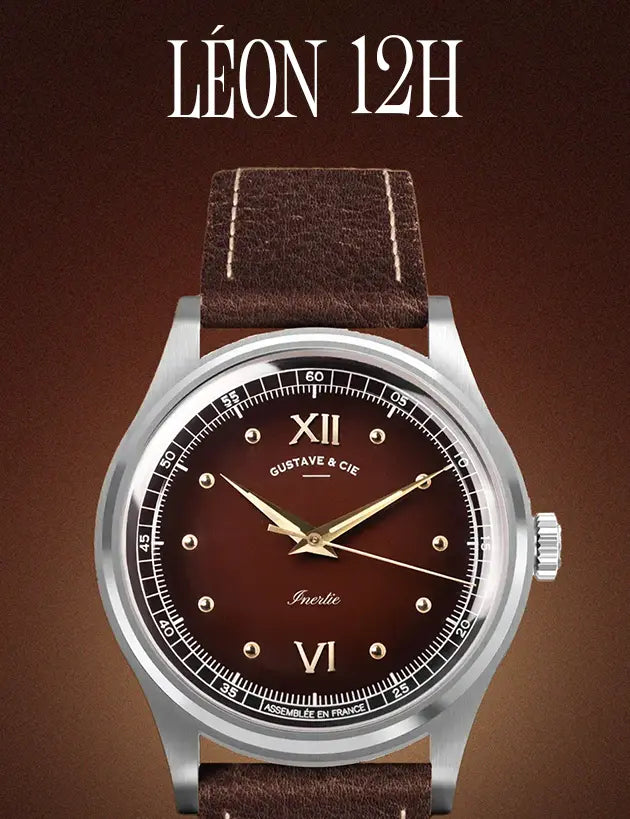
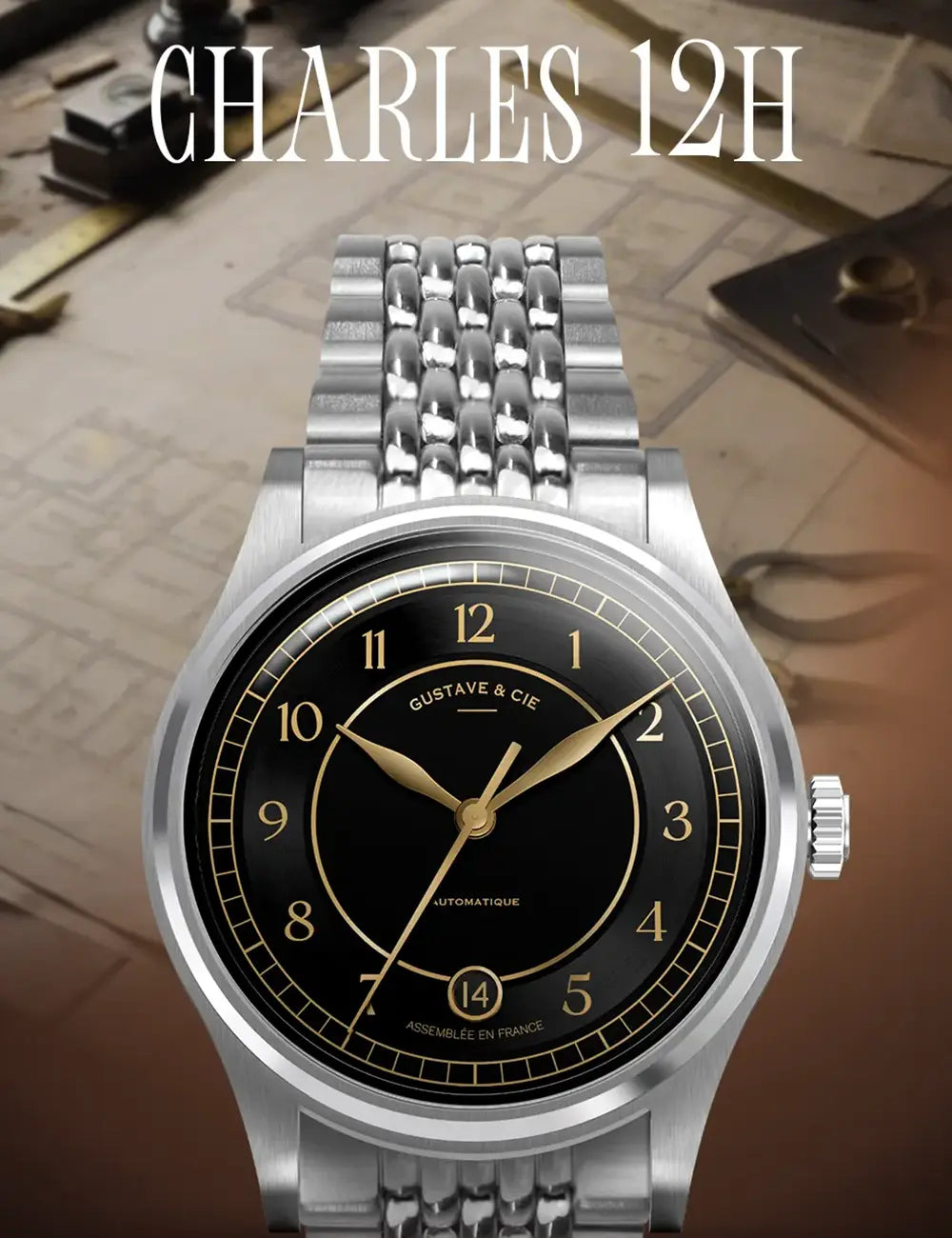
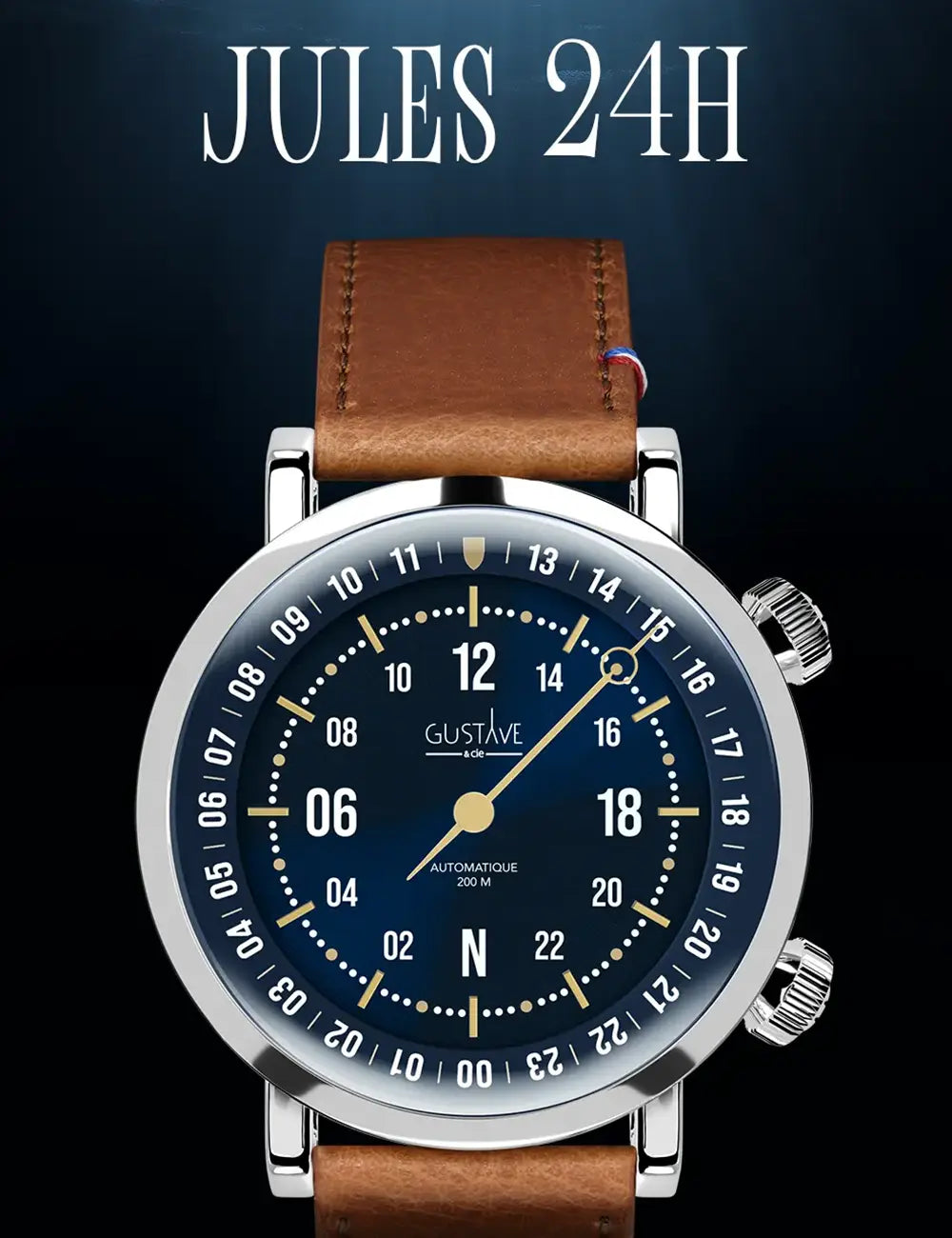
The fluted crown of a watch from the Charles and Léon collections by Gustave & Cie, the central element of the interface between the wearer and the horological mechanism.
What is a watch crown and what is its history?
Before the mid-19th century, pocket watches required a small, independent key to be wound and set to the correct time. This system, albeit elegant, presented a major drawback: the key was easily lost, and its insertion exposed the movement to dust. The invention of the keyless works (the direct ancestor of the modern crown) revolutionised horology by integrating this function directly into the case.
Today, the watch crown consists of several elements that remain invisible from the outside. It is attached to a metal shaft, known as the "winding stem", which penetrates deep into the movement. This stem interacts with a complex system of pinions and levers (notably the setting lever and the sliding pinion). Depending on the position into which the crown is pulled, it will engage different gears within the calibre.
It is this invisible engineering that allows multiple distinct actions to be performed from a single external button. Whether the watch houses a fiercely precise quartz movement or a traditional mechanical movement, the crown remains the absolute command centre.
|
Period |
Winding system |
Operation |
Main evolution |
|
18th century |
Winding key |
A removable key is inserted directly into the movement to wind the mainspring. |
A simple and effective system, but requiring a separate accessory. |
|
Early 19th century |
Improved key |
Key-winding mechanisms become more reliable and precise. |
Improved ease of use and reliability of watches. |
|
1830s–1840s |
Keyless winding |
Winding is carried out progressively thanks to a system integrated into the watch, notably via a knurled wheel or button. |
Elimination of the independent key and simplification of use. |
|
1842 |
Winding crown |
The crown allows the movement to be wound directly from the outside of the case. |
An innovation that contributes to making winding more practical and elegant. |
|
Late 19th century |
Integrated crown |
The crown becomes a standard element of the watch and can also control the time setting. |
Unification of winding and time setting on a single component. |
|
20th century |
Crown + manual winding |
The crown directly transmits the movement of the fingers to the mainspring via a system of gears. |
Standardisation of manual winding on mechanical watches. |
|
20th century |
Automatic winding |
A rotor transforms the movements of the wrist into energy to automatically wind the spring. |
Elimination of the need to wind the watch daily under normal conditions of use. |
|
Today |
Modern crown |
The crown can perform several functions: winding, time setting, date correction, or other complications depending on the movement. |
A compact, multifunctional, and ergonomic component, some designs of which benefit from patents. |
Technical operation: a multi-position command centre
The operation of the crown relies on a miniaturised clutch system. By gently pulling on it, you alter the position of the winding stem, which moves pinions inside the movement to activate different functions.
Generally, a classic crown offers up to three distinct positions:
-
Position 0 (pushed against the case): On a manual or automatic mechanical watch, this is the winding position. By turning it, you tension the barrel spring which stores energy. On a quartz watch, this position has no mechanical action; it simply guarantees the isolation of the case.
-
Position 1 (pulled to the first notch): This is often dedicated to setting complications. It is here that the quick correction of the date, the day of the week, or sometimes the setting of a GMT hand for a second time zone is carried out.
-
Position 2 (pulled to the second notch): This is the time-setting position. The mechanism generally stops the seconds hand ("hacking seconds" function) for highly precise setting, and the rotation of the crown directly drives the hour and minute hands.

Technical diagram illustrating the three positions of the crown: position 0 for winding, first position for adjusting complications, and second position for setting the time.
The vital importance of the crown for water resistance
If the crown is the bridge between the outside and the inside of the watch, it is also its main point of vulnerability. The opening through which the winding stem passes the case is the ideal place for water, moisture, or dust to infiltrate. This is why the design of the crown is inseparable from the overall water resistance of the timepiece.
To protect the movement, horologists integrate tiny rubber O-rings inside the crown tube. When the crown is pushed back into position 0, these seals are compressed and provide a hermetic barrier. However, there are two main families of crowns:
-
The push-pull crown: Found on the majority of dress and elegant watches (often water-resistant to 3 or 5 ATM), it relies on the simple pressure of the seals. It is more than sufficient to withstand everyday splashes or rain.
-
The screw-down crown: Essential for dive watches (water resistance of 10 ATM and above). The crown features an internal thread and screws directly onto the case tube, firmly crushing a thick waterproof seal. This guarantees total impermeability even under intense underwater pressure.
Regardless of the technology employed, it is imperative never to operate the crown underwater or when the watch is wet, at the risk of seeing condensation form beneath the glass.
How to properly handle and maintain your crown?
As the crown is connected to extremely fine mechanical components, it requires careful handling to ensure the longevity of your watch. Many horological faults are due to poor habits when setting the time or winding.
Here are the golden rules for preserving your mechanism:
-
Avoid setting your watch whilst on the wrist: It is recommended to remove the watch from your wrist before any handling. Indeed, setting the time while keeping the watch on the wrist creates off-axis tension. Removing it avoids any lateral pressure on the crown stem, which could be damaged or bent.
-
Manual winding: If you need to restart a mechanical movement, turn the crown clockwise (upwards). This is the only direction in which the mechanism accepts being wound, and around twenty turns are usually sufficient to optimally start the movement.
-
Respect the danger zone: If your watch features a date, avoid setting it (in position 1) between 9:00 PM and 3:00 AM. It is during this time frame that the calendar gears are engaged to trigger the date jump. Forcing the setting at this exact moment can break the teeth of the date wheel on older watch movements. Today, movements with a date are produced in such a way that there is little risk of breakage, but avoiding the danger zone remains a good habit.
Aesthetics: when the crown becomes a design signature
Beyond its strictly functional role, the watch crown is a privileged area of expression for horological designers. Its shape, size, and finishes contribute greatly to the visual identity of the timepiece.
Some aviator watches, for example, feature so-called "onion" or "diamond" crowns, deliberately oversized so they can be handled with thick leather gloves. Jewellery watches are often topped with a precious stone cabochon (sapphire or spinel) to highlight their preciousness. On watches with a contemporary and minimalist design, the crown remains discreet, almost flat, sitting flush with the case so as not to break the fluidity of the lines.
Furthermore, the top of the crown is traditionally the place where the brand affixes its signature. Whether it is a laser-engraved logo, a raised letter, or a stamped emblem, this detail testifies to the care given to the finishes and reinforces the distinctive character of the assembled piece.
Conclusion
The watch crown is far more than a simple setting button; it is the fundamental link between the mechanical expertise of the horologist and the user. Upon its design depend the water resistance, the precision of the time setting, and the safety of the internal movement. Whether it is screwed down to brave oceanic depths or delicately pushed in on a dressy city watch, it demands careful and respectful handling.
By understanding the complex mechanisms that come to life each time you pull or turn it, you will never look at setting your timepiece in the same way again. The next time you adjust the hands on your dial, take a moment to appreciate this small feat of engineering that makes the mastery of time possible.
Discover our collection of watches assembled in France

Leave a comment
This site is protected by hCaptcha and the hCaptcha Privacy Policy and Terms of Service apply.