


The Elegance of Utility: The Influence of Decorative Arts on Everyday Objects
Humanity has always felt a visceral need to surround its existence with beauty. If we carefully observe the environment around us, a silent truth emerges: the boundary between a work of art and a utilitarian tool is an illusion. A simple chair, a desk lamp, or even the dial of a watch that sets the rhythm of our days was not born ex nihilo. They are the result of a long and fascinating evolution where the influence of decorative arts on everyday objects has redefined our way of inhabiting the world.
At the crossroads of fine craftsmanship, industry, and culture, the decorative arts have led a veritable crusade to introduce poetry into the mundane. It is no longer merely about designing an object to fulfil a function, but about infusing it with a soul, an emotion, and a literary and visual resonance. How, over the centuries, have the great artistic movements shaped the design of our interiors and our most intimate accessories? Let us delve into the history of this perpetual quest for harmony.

Art Deco lounge, where deep blue velvet and structured lines reinvent comfort with timeless elegance.
Credit : Pexels - official image, editorial use.
The Arts & Crafts Movement: Craftsmanship's revolt against the machine
In the heart of the 19th century, as the Industrial Revolution was in full swing, flooding Europe with mass-produced, standardised products often devoid of charm, a voice was raised in England. William Morris, a pioneer of the Arts & Crafts movement, refused to see humanity sacrifice beauty on the altar of profitability. For him, art had to permeate every home, and every object had to be a reflection of the craftsman's expertise.
This fundamental movement posits that the influence of decorative arts on everyday objects is a social necessity. Tapestry, ceramics, glassware, and cabinetmaking experienced a spectacular renaissance. Patterns drew inspiration from nature, local flora, and medieval legends. Objects regained texture, warmth, and singularity. It was then considered that a teapot or a rocking chair deserved as much artistic attention as a masterpiece on canvas.
To go further: Article on the Arts and Crafts movement
The impact of this philosophy was colossal. It laid the foundations for what would become, in the following century, industrial design. By restoring dignity to the common object, the artisans of the Arts & Crafts movement proved that function does not have to preclude ornamentation.
Art Nouveau: When organic poetry invites itself into the home
At the dawn of the 20th century, a wind of freedom and lyricism swept across Europe. Art Nouveau emerged as an impassioned ode to nature, feminine curves, and organic forms. The rigid, straight lines of burgeoning industry were swept away by the famous asymmetrical, lively "whiplash" lines.
The influence of decorative arts on everyday objects reached its zenith here. Art invaded the streets, architecture, and above all, interiors. Émile Gallé's lamps resembled luminous mushrooms or flowers, René Lalique's jewellery transformed into precious insects, and furniture seemed to grow from the floor like vines. In France, one man epitomised this formal revolution: Hector Guimard. He is particularly renowned for his entrances to the Paris Metropolitan, which transformed a mundane mode of transport into a dreamlike aesthetic experience.
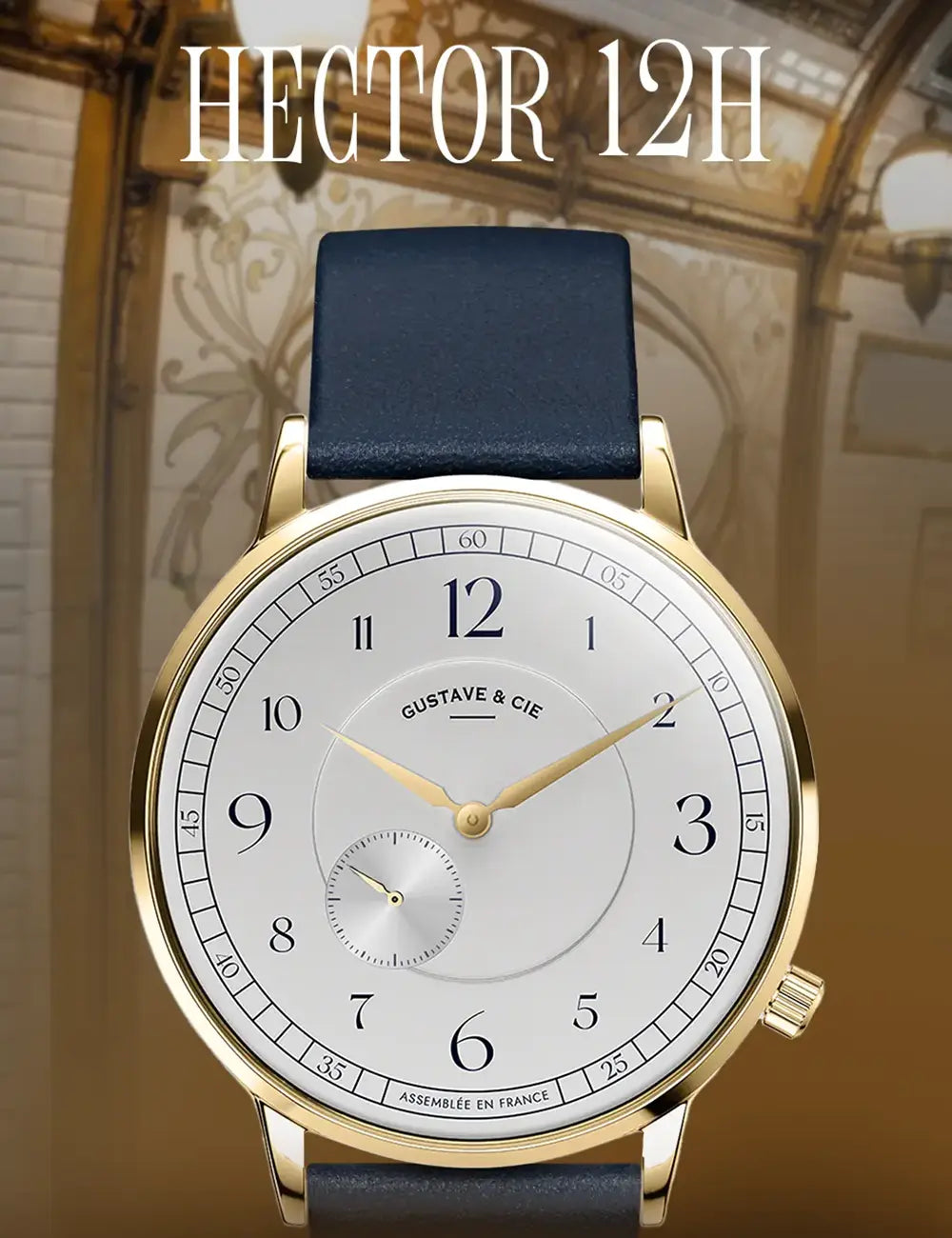
This fascinating period continues to inspire today's creators, notably in the demanding world of horology. Indeed, it is by drawing on this heritage that the Hector 12H collection pays homage to Hector Guimard, a great master of Art Nouveau. True to their roots, the creators opted for a slender case profile, featuring a crown at 4 o'clock, available in 36mm and 40mm on a steel, PVD Rose Gold, or PVD Yellow Gold case. Tangible proof that an everyday object, such as a watch, can carry within it the DNA of a major cultural movement.
Art Deco: The brilliance of geometry and luxury
In the aftermath of the First World War, the opulent curves of Art Nouveau gave way to a radically different aesthetic. The Roaring Twenties were marked by a thirst for modernity, speed, and structure. Art Deco was born from this desire to tame space with geometric lines, perfect symmetries, and a refined yet luxurious elegance.
It was under Art Deco that the influence of decorative arts on everyday objects truly married mass production, without ever forsaking beauty. Noble materials (shagreen, mahogany, mother-of-pearl) sat alongside modern materials such as polished glass and stainless steel.
-
Tableware: Cutlery, glasses, and decanters adopted aerodynamic profiles, reminiscent of transatlantic ocean liners and the first aeroplanes.
-
Household appliances: Radios, which had become the nerve centres of the living room, were sculpted like true modern totems, crafted from walnut wood and Bakelite.
-
Personal accessories: Powder compacts, lighters, and cigarette cases became small masterpieces of marquetry and enamel.
Art Deco taught humanity that pragmatism and functionalism could be magnified by mathematical rigour and a choice of materials of absolute purity.

A striking contrast between the organic exuberance of Art Nouveau and the geometric rigour of Art Deco.
Horology: Time sculpted by the decorative arts
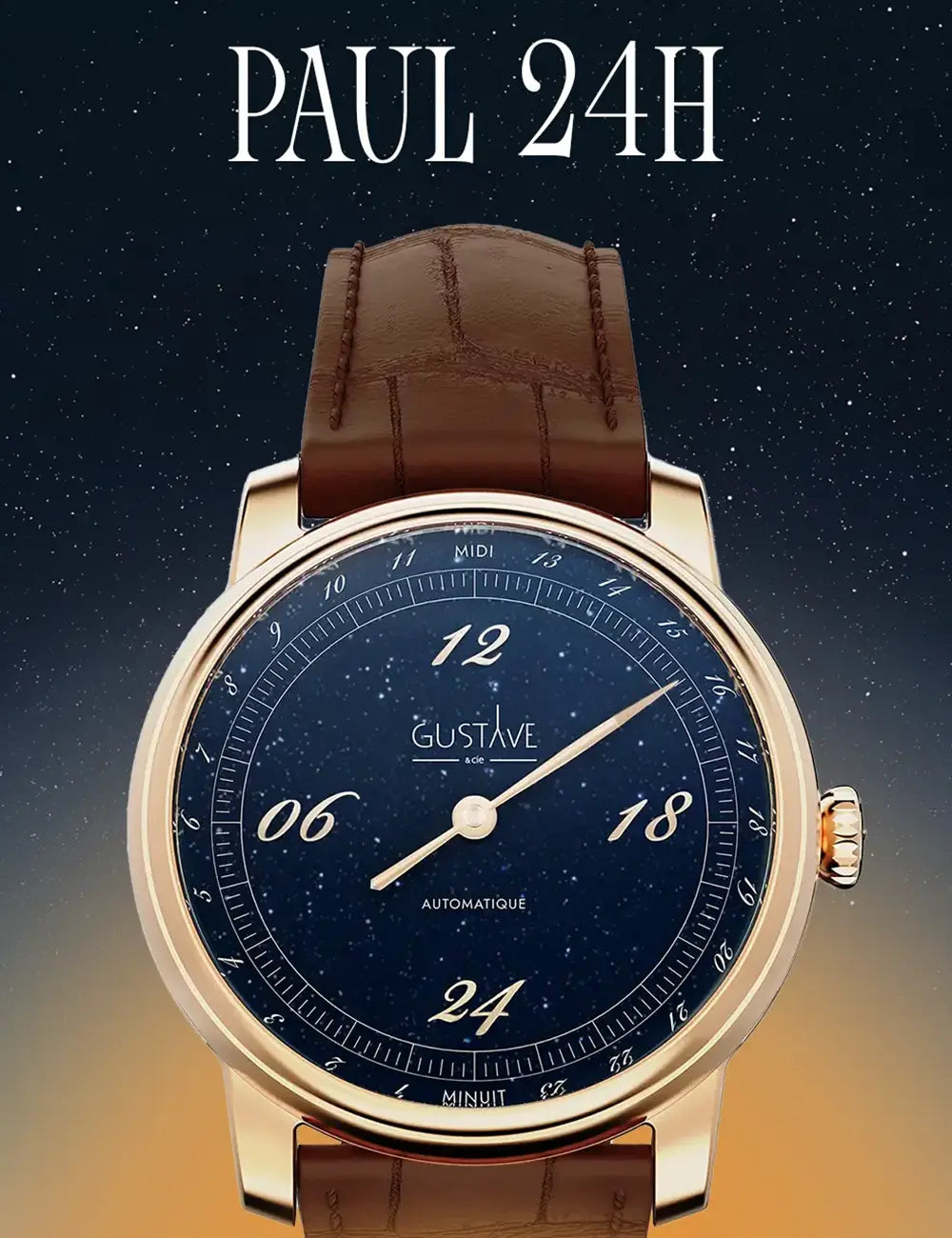
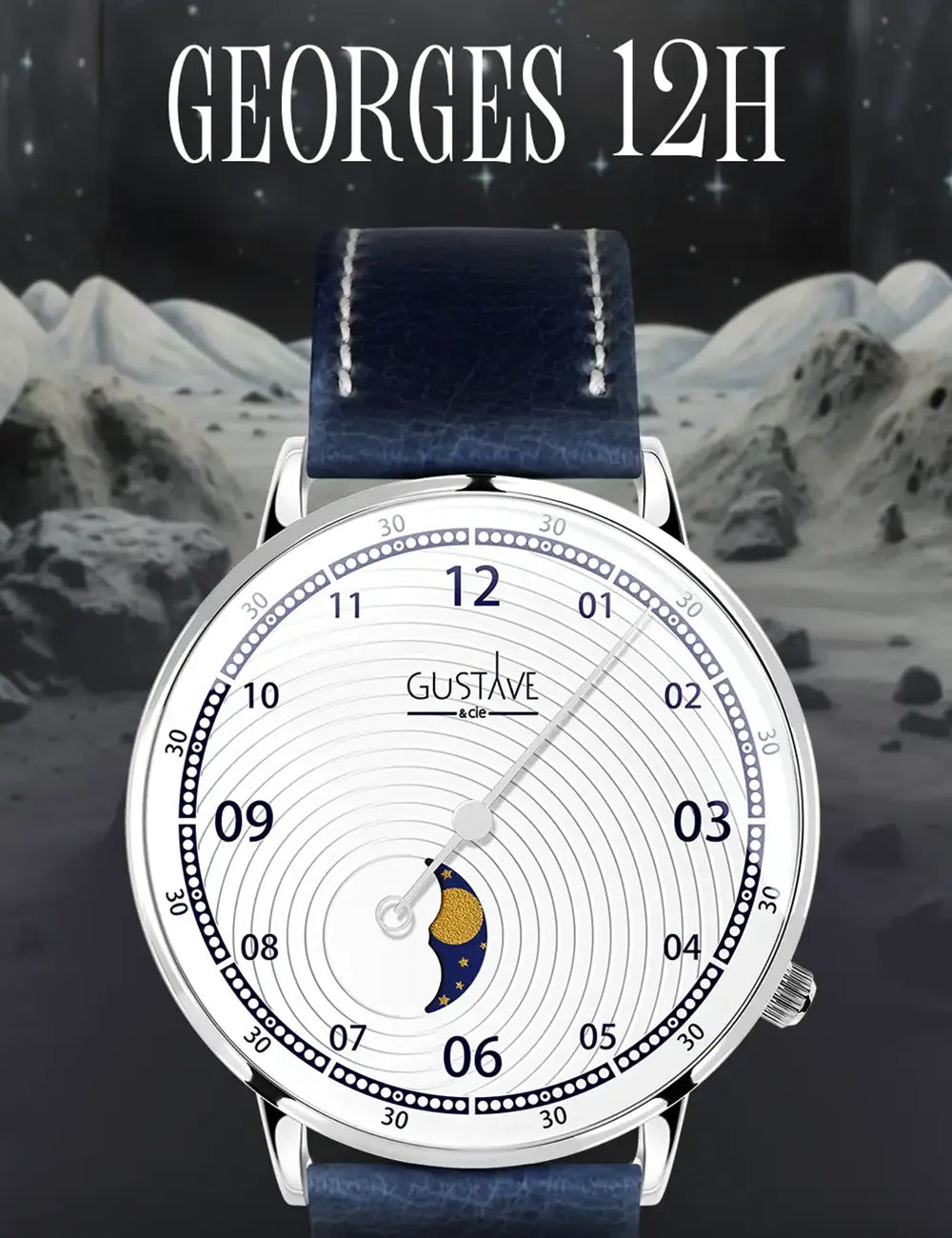
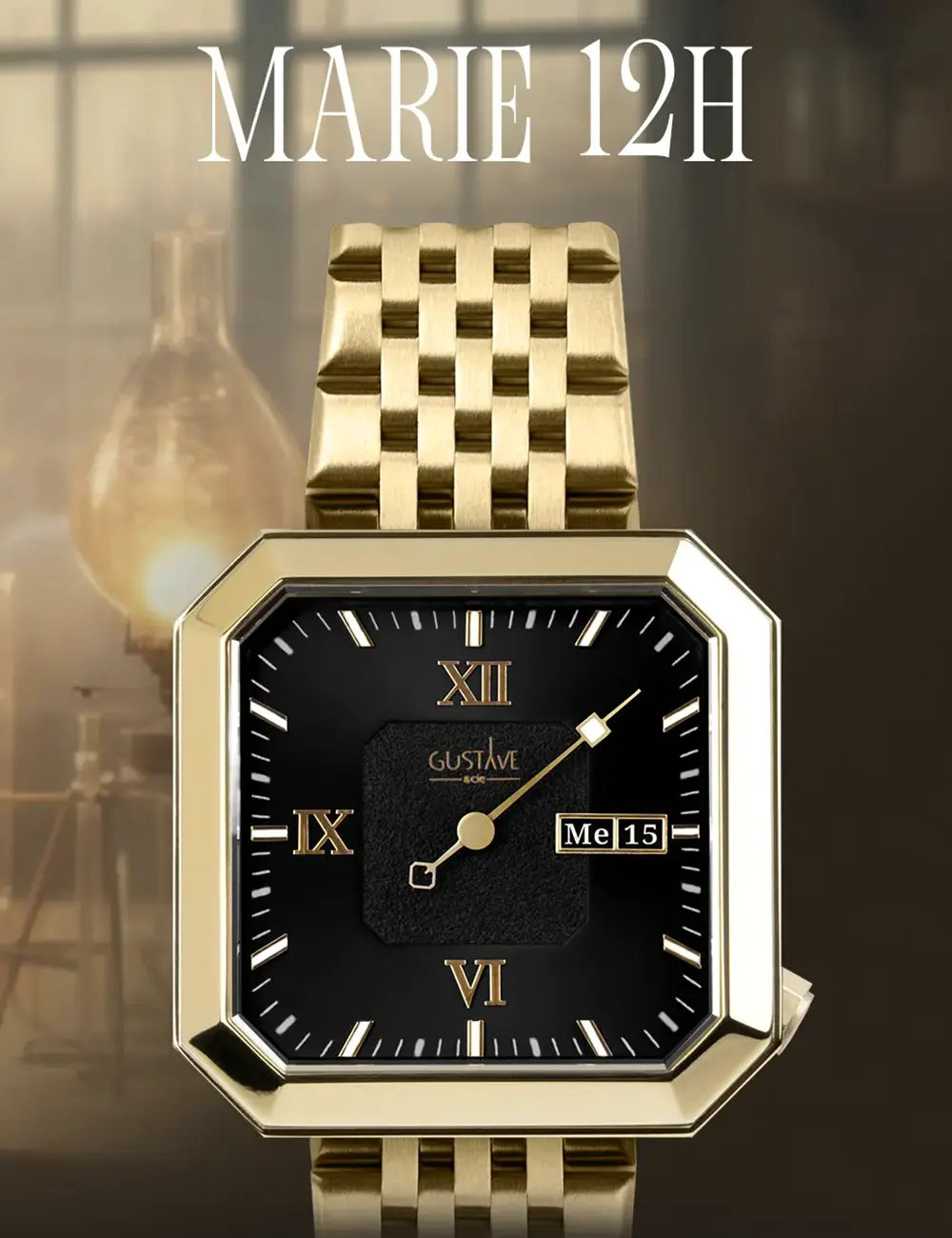
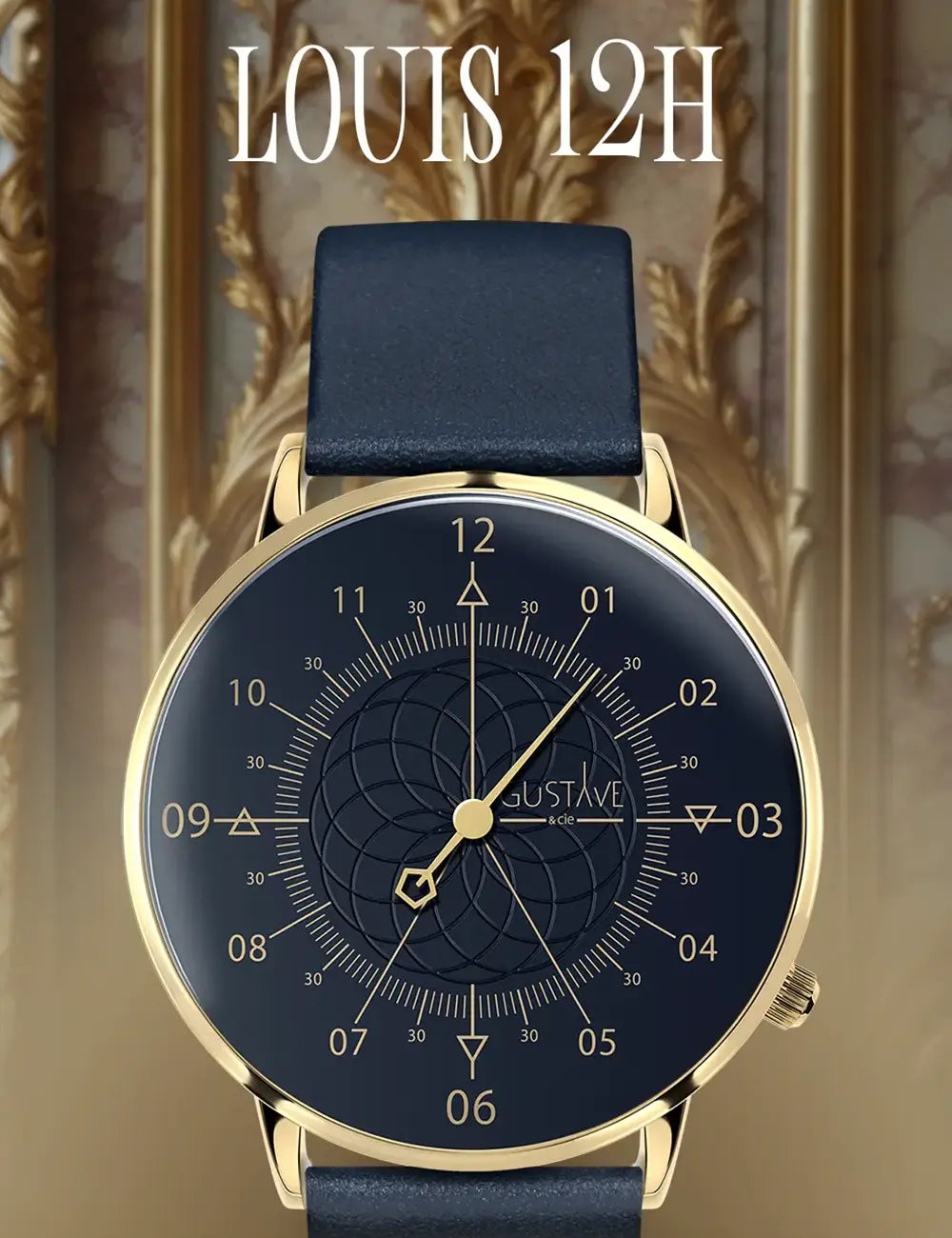
If there is one everyday object that perfectly crystallises the influence of the decorative arts, it is the watch. The instrument of measurement par excellence, it has transitioned from a scientific tool to a piece of jewellery and an accessory of lifestyle.
During the Art Deco period, horology underwent a true aesthetic revolution. Watches permanently left pocket watches to be strapped to wrists. Classic round cases gave way to bold shapes: rectangular, square, tonneau, or even cushion. Dials were adorned with geometric typography, stylised Arabic numerals, and sublime interplays of texture, ranging from guilloché to champlevé enamel.
Time is no longer merely read; it is contemplated. The design of a watch requires the intervention of numerous artistic crafts: the dial maker, the hand maker, the engraver, the enameller. The horological object thus becomes the perfect microcosm where mechanical engineering dialogues with the finesse of the decorative arts. It is this synergy that differentiates a simple timepiece from a piece endowed with a true supplement of soul, capable of crossing generations.
From the Bauhaus to contemporary design: The essential as an ideal
The journey through the influence of decorative arts on everyday objects would not be complete without mentioning the Bauhaus. Founded in 1919 by Walter Gropius, this German school imposed a doctrine that still resonates powerfully today: Form follows Function.
The Bauhaus stripped the object of its superfluous ornaments to reveal its intrinsic beauty. Aesthetics were now born from the clarity of function, the precision of proportions, and the harmony of materials. This vision democratised beauty. Marcel Breuer's tubular chair, Wilhelm Wagenfeld's lamps, and highly legible, minimalist watch dials are direct legacies of this.
To go further: Wikipedia page for the Bauhaus school
Today, this approach continues to dictate the codes of industrial design and contemporary horological creation. We seek objects that do not clutter our minds; calming, clear, and legible lines. The influence of decorative arts has thus mutated, shifting from the rich ornamentation of Art Nouveau to the sophisticated minimalism of the 21st century, where ultimate luxury resides in purity and absolute legibility.
Conclusion
Ultimately, the influence of decorative arts on everyday objects is a formidable lesson in humanism. It reminds us that we are not machines condemned to manipulate cold, soulless tools. From the Arts & Crafts movement to the radical elegance of the Bauhaus, passing through the lyricism of Hector Guimard and the geometry of Art Deco, creators have tirelessly fought to elevate matter.
Every object you hold in your hands, every watch you strap to your wrist, is the custodian of this rich cultural history. Surrounding oneself with carefully designed objects means refusing the mundane and celebrating, on a daily basis, an art of living where utility bows gracefully before beauty.
Discover our Hector 12H collection in hommage to Hector Guimard

Leave a comment
This site is protected by hCaptcha and the hCaptcha Privacy Policy and Terms of Service apply.