


Gustave Eiffel: engineering and symbol of France
When your gaze falls upon the Parisian skyline, a silhouette inevitably imposes itself upon you, familiar and majestic. A lacework of steel reaching towards the sky, it is the fruit of the visionary mind of a single man: Gustave Eiffel. Far more than a mere builder, this genius engineer managed to capture the essence of the Industrial Revolution to forge a visual identity that still resonates today across the globe.
In the 19th century, while stone had dominated architecture for millennia, Gustave Eiffel made the bold wager of using metal. His precise calculations, structural audacity, and intimate understanding of physical forces redefined the limits of the possible. However, reducing his legacy to the sole tower that bears his name would be a mistake.
From the framework of the Statue of Liberty to the dizzying bridges spanning European valleys, his work bears witness to a relentless quest for perfection. Let us delve together into the history of Gustave Eiffel, a leading figure of engineering and an eternal symbol of France, whose exacting standards echo the values of precision and craftsmanship that we hold so dear.
The Emergence of a Visionary Architect of Iron
Born in Dijon in 1832, Alexandre Gustave Bonickhausen, known as Eiffel, grew up in a rapidly changing France. The industrial era was in its infancy, driven by the rise of the railways and metallurgy. Graduating from the prestigious École Centrale des Arts et Manufactures in 1855, young Gustave quickly specialised in chemistry, before turning to metallurgy, fascinated by the endless possibilities offered by puddled iron.
At the time, metallic construction was still viewed with a certain degree of suspicion. Engineers favoured cast iron, which was heavy and brittle. Eiffel, however, understood that iron, through its flexibility and relative lightness, allowed for the conception of structures of an unprecedented scale. From his very first projects, notably the Bordeaux railway bridge in 1858, he demonstrated an exceptional mastery of technical constraints, combining solidity with speed of execution.
His method rested on an implacable mathematical rigour. Every piece was designed and calculated to the nearest millimetre in his Levallois-Perret workshops, then assembled on-site with the precision of a watchmaker. This modular approach, revolutionary for its time, became his signature. It allowed him to win tenders across the entire world, thereby spreading the excellence of French engineering.

Gustave Eiffel (1832–1923), French engineer and entrepreneur, a major figure in 19th-century metallic architecture and engineering.
Source: Trésor du Patrimoine - Gustave Eiffel, un ingénieur visionnaire - official image, editorial / press use
The Art of Metallic Architecture: From Viaducts to Liberty
Before touching the Parisian clouds, Gustave Eiffel distinguished himself through spectacular crossings, taming geography thanks to his ingenuity. One of his most striking masterpieces remains the Garabit viaduct, completed in 1884. Suspended above the Truyère gorges in the Cantal region, this arch of iron painted in a vibrant red appears to float in the air. At 122 metres high, it illustrates Eiffel's ability to blend functional utility with a purely structural aesthetic.
A few years earlier, in Portugal, he had already caused a sensation with the Maria Pia bridge in Porto, proving the viability of his large-format metallic arches. But Gustave Eiffel's genius also exported itself across the Atlantic, in a rather different form.
When the sculptor Auguste Bartholdi envisioned the Statue of Liberty, he faced a colossal technical challenge: how to make a 46-metre-high copper colossus stand upright, exposed to the violent winds of New York Bay? It was to Gustave Eiffel that he turned. The engineer designed a flexible central metallic pylon, a sort of spine upon which the copper skin is suspended. This invisible framework, a masterpiece of engineering concealed beneath the features of Liberty, remains one of his most significant contributions to world history.
The Eiffel Tower: The Controversial Masterpiece Turned Global Icon
The apotheosis of Gustave Eiffel's career occurred during the 1889 Universal Exhibition, organised to celebrate the centenary of the French Revolution. The challenge presented to engineers was staggering: to erect a 300-metre-high iron tower on the Champ de Mars. Alongside his collaborators Maurice Koechlin and Émile Nouguier, as well as the architect Stephen Sauvestre, Eiffel proposed a project that defied the imagination.
The construction of the Eiffel Tower was an unprecedented technical feat. For two years, two months, and five days, workers assembled 18,038 metallic pieces using 2.5 million rivets. The site progressed with a staggering mathematical exactitude, without a single fatal accident among the structural workers, a remarkable human achievement for the era.
Yet, the project was far from universally acclaimed. As early as 1887, an open letter signed by great names in arts and letters, including Guy de Maupassant, Alexandre Dumas fils, and Charles Garnier, protested against this "useless and monstrous Eiffel Tower", perceived as a desecration of the beauty of Paris. Facing these detractors, Gustave Eiffel defended his work with the passion of a builder, asserting that its curves, dictated by wind resistance, possessed their own mathematical beauty. History would prove him right: from its inauguration, the tower became a resounding popular success, definitively establishing itself as the symbol of modern France.

The Eiffel Tower construction site (1887-1889), highlighting the foundations and the progressive assembly of its metallic structure.
Source: Association des Descendants de Gustave Eiffel - La Tour Eiffel - official image, editorial / press use
Gustave Eiffel’s Major Achievements
|
Major Work |
Year of Completion |
Location |
Technical Challenge Overcome |
|
Maria Pia Bridge |
1877 |
Porto, Portugal |
Crossing the Douro River with a 160-metre wrought-iron arch, assembled using the cantilever method (suspended in mid-air) without ground-based scaffolding. |
|
Garabit Viaduct |
1885 |
Cantal, France |
Crossing a deep valley with a structure reaching 122 metres in height, requiring precise calculations to withstand strong winds. |
|
Statue of Liberty (Internal Framework) |
1886 |
New York, United States |
Designing a flexible central iron pylon acting as a “backbone” to support 80 tonnes of copper while withstanding the strong winds of New York Harbor. |
|
Eiffel Tower |
1889 |
Paris, France |
Constructing an unprecedented 300-metre-tall structure (the world’s tallest at the time), mastering an aerodynamic form to resist wind loads, and assembling 18,038 individual iron components. |
Beyond Steel: The Scientific Legacy of Gustave Eiffel
While metallic engineering brought him glory, the end of Gustave Eiffel's career revealed another facet of his mind: that of a dedicated scientist. Unjustly compromised in the Panama Canal financial scandal in 1893 (of which he was ultimately cleared), he decided to retire from the business world to devote himself to experimental research.
To save his tower, initially slated for demolition after twenty years, he had the brilliant idea of turning it into a giant scientific laboratory. He installed meteorological stations there and encouraged wireless telegraphy experiments, thus saving the monument through its strategic and military utility.
But it was in aerodynamics that Eiffel would distinguish himself most. He built a revolutionary wind tunnel, first at the foot of the Tower and then on rue Boileau in Auteuil. His experiments on air resistance and aircraft wing profiles would lay the scientific foundations for nascent aeronautics. At over 80 years old, Gustave Eiffel continued to innovate, proving that his analytical mind was not limited to earthly gravity, but also extended to the conquest of the skies.
Gustave & Cie: A Tribute to French Ingenuity
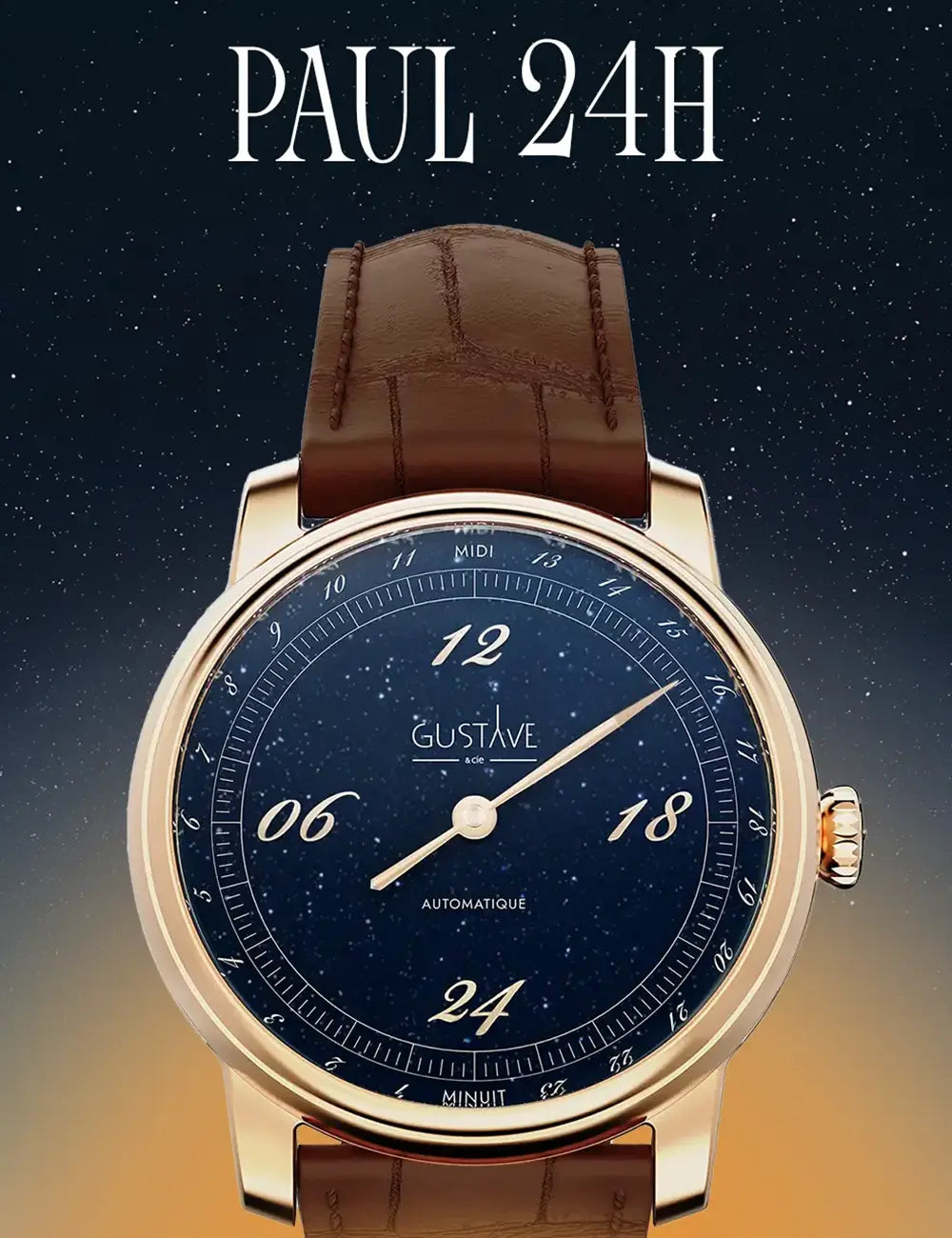
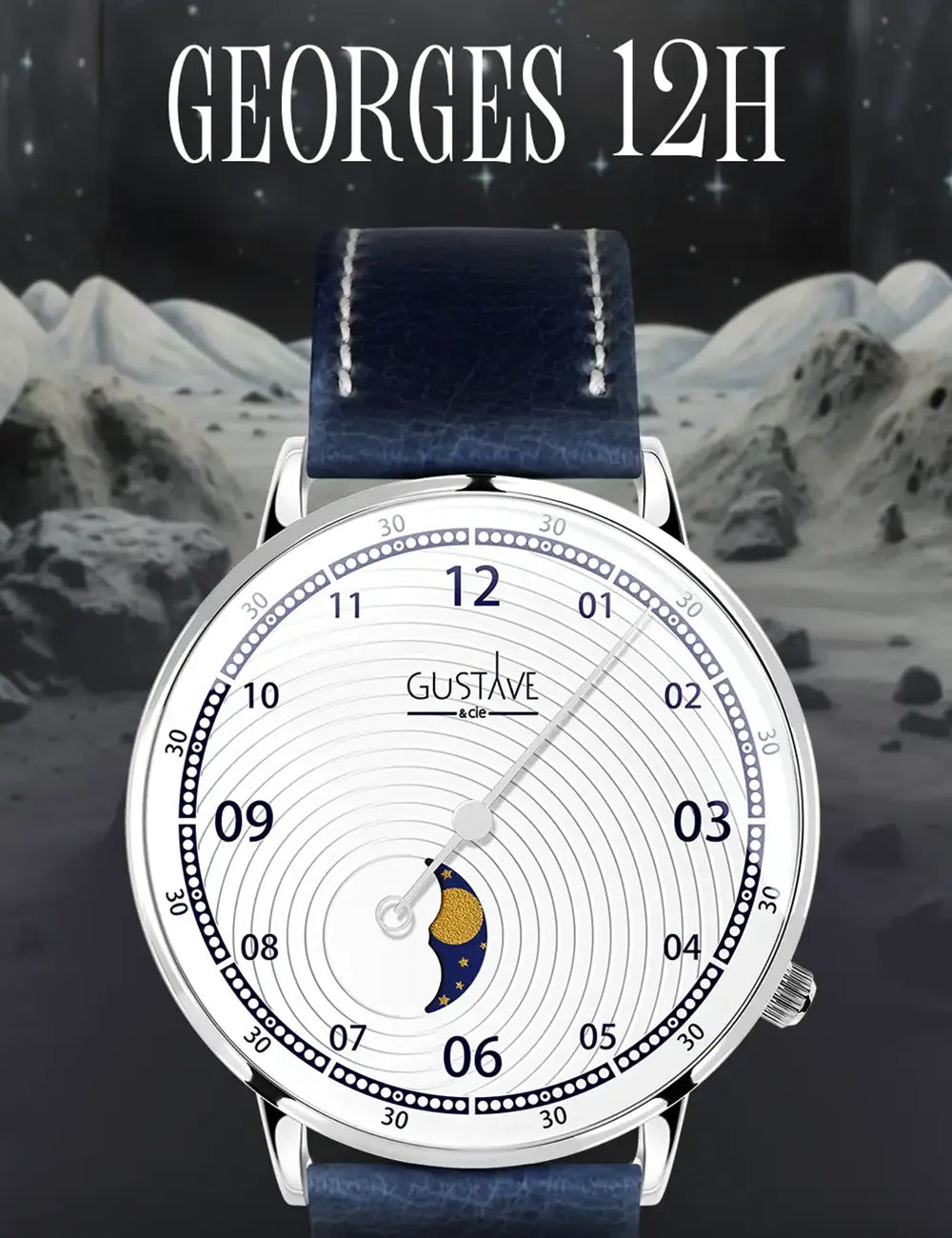
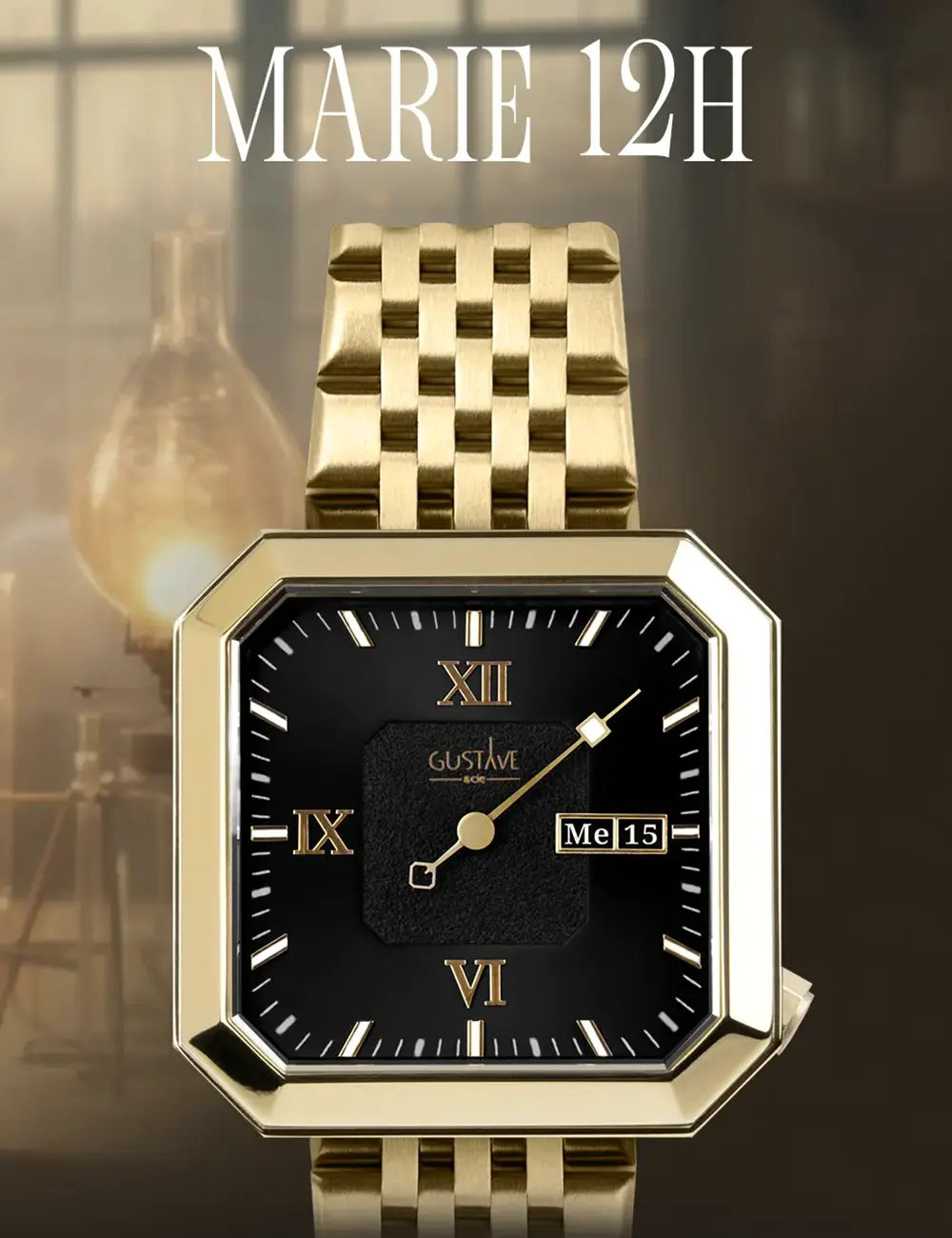
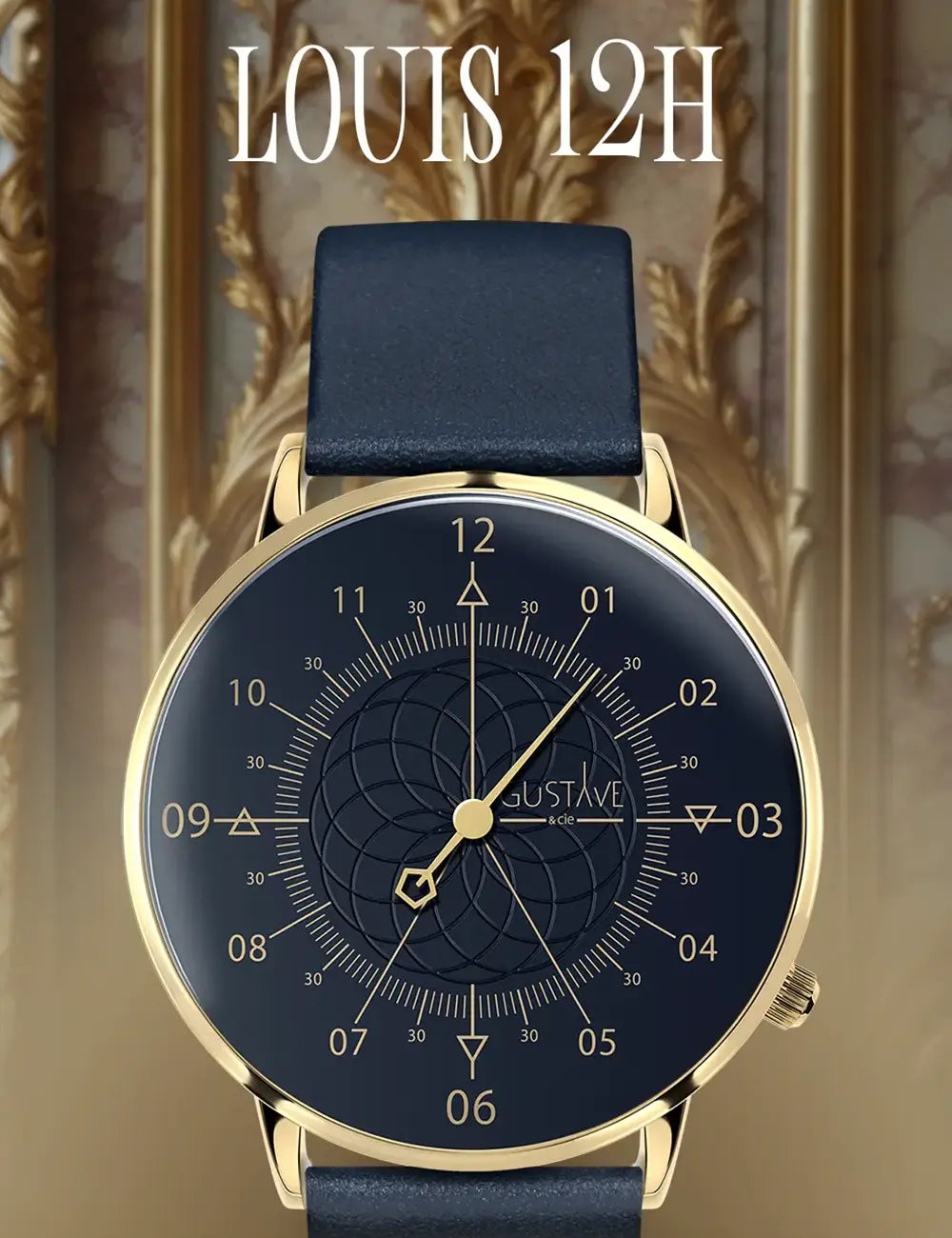
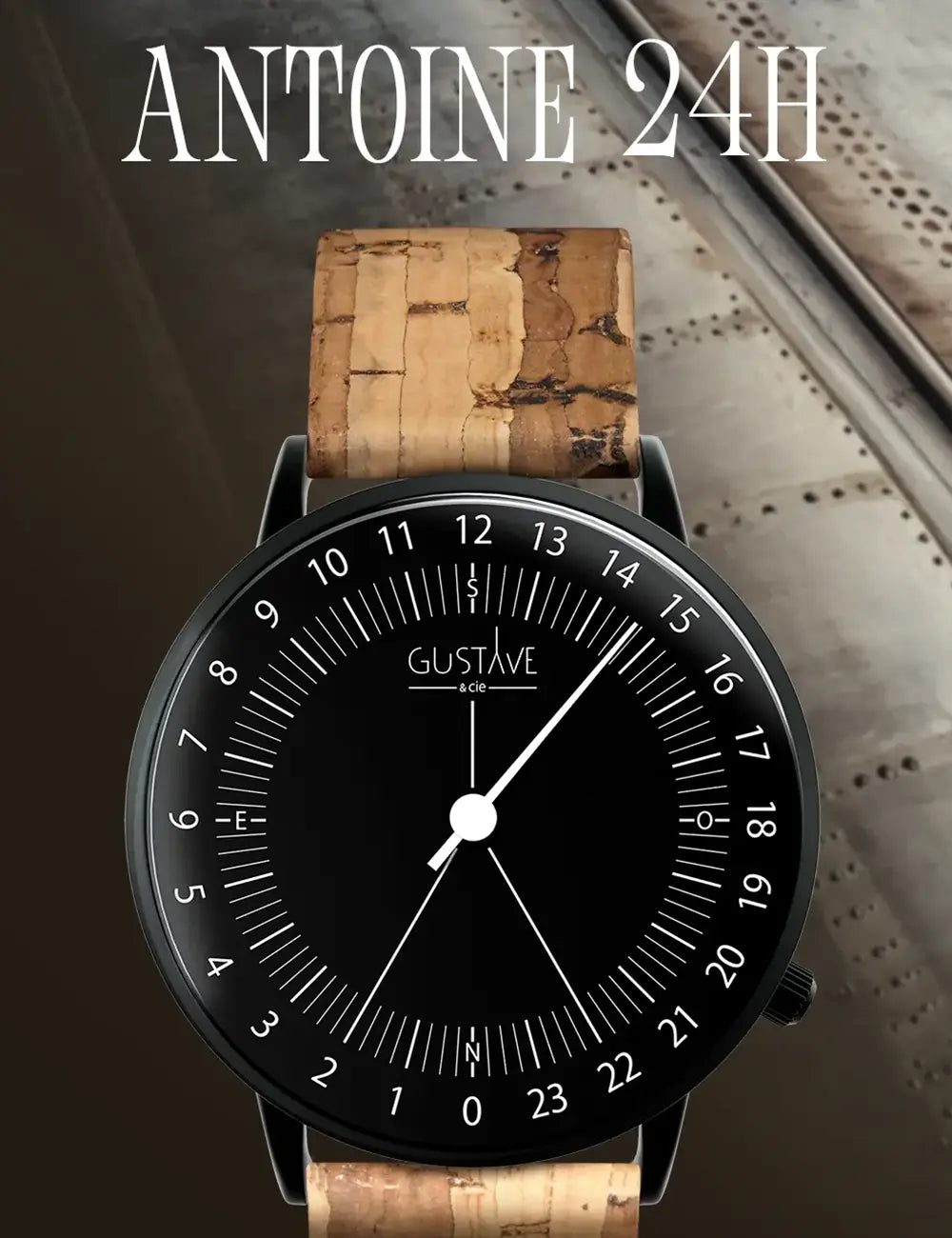
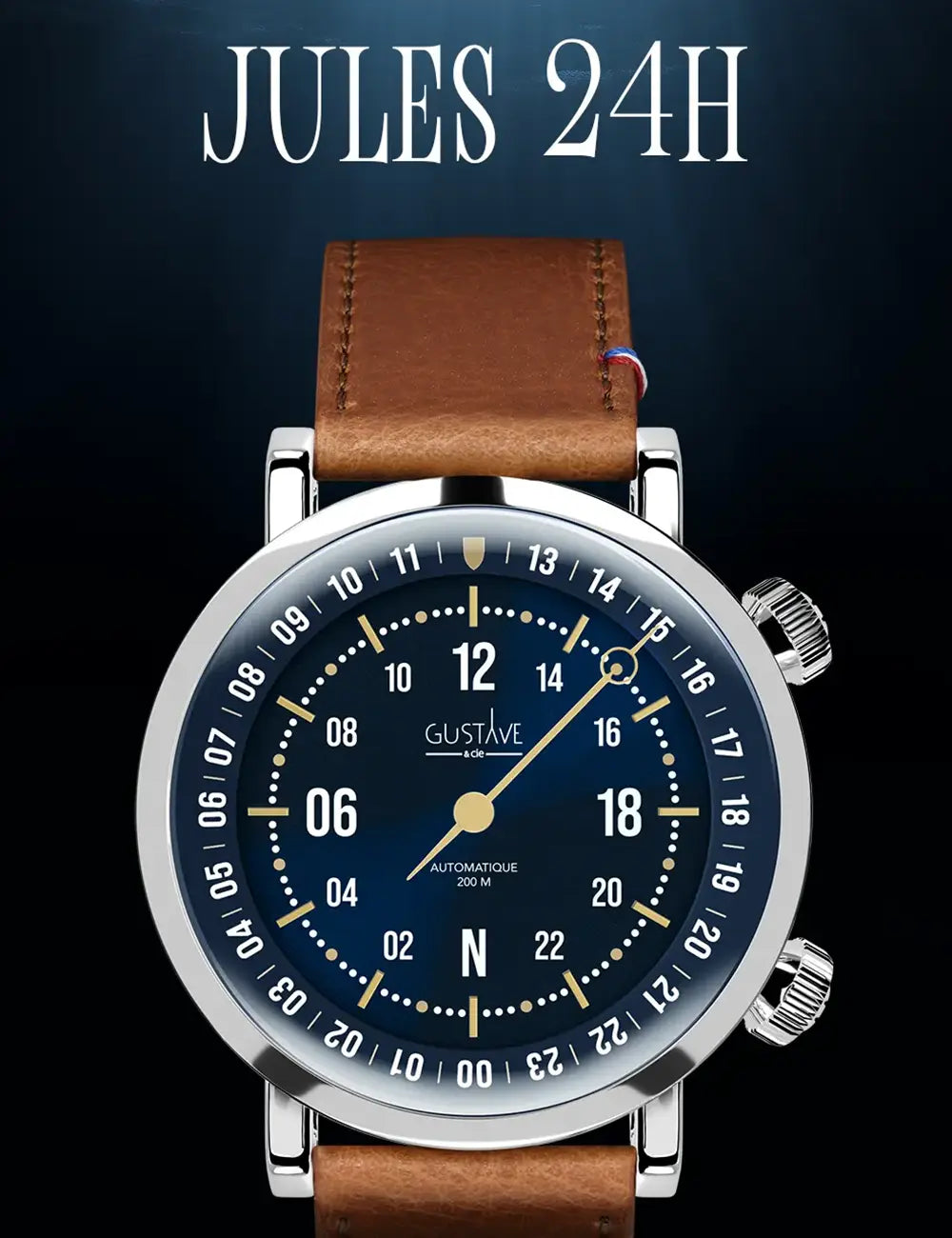
Hailing from Dijon, just like the famous engineer, the creators of our house chose the name "Gustave & Cie" as a direct tribute to this exceptional legacy. This inspiration guides the direction of our house: to recognise and champion French ingenuity through every timepiece. More than just a name, it is a promise of respectability and craftsmanship, rooted in the desire to celebrate the personalities and innovations that have marked the history of our country.
Conclusion
The name of Gustave Eiffel resonates today far beyond the borders of the Hexagon. He embodies an era where audacity married mathematical precision, where iron bent to the will of the human spirit to create immortal works. From the Garabit Viaduct to the spire of his Parisian tower, his engineering has shaped our landscape and redefined global architectural ambitions.
This legacy of excellence, rigour, and innovation is a true symbol of France. It reminds us that great achievements, whether they be monuments defying the clouds or mechanisms measuring time with absolute reliability, always rest upon a single quest: that of a job well done and technical elegance. When casting an eye over his work, one can only admire the accuracy of this vision, which crosses centuries without ever losing its splendour.
DISCOVER OUR COLLECTIONS IN TRIBUTE TO THE GREAT FIGURES OF FRENCH INGENUITY
Banner source: Ahmet Azakli - La Tour Eiffel, merveille architecturale à Paris - Pexels
Leave a comment
This site is protected by hCaptcha and the hCaptcha Privacy Policy and Terms of Service apply.